
Cost of Living in Panama City 2026: The Honest Expat Guide
Panama City is frequently called the most expensive capital in Central America, and it is. It’s also the best-run, with USD pricing that eliminates currency risk for American expats, infrastructure that’s markedly better than most of Latin America, and a major international hub airport that puts the world 3–4 hours away. Whether the premium is worth it depends on what you want.
This guide is numbers-first. Real rent prices by neighborhood, grocery bills, utility costs, and honest monthly budget tiers. Panama City attracts a different expat profile than Medellín or Quito; typically higher-budget professionals and retirement-age Americans who want comfort, stability, and good healthcare alongside a tropical lifestyle. If that’s you, the numbers here will tell you whether your budget works.
Panama City Neighborhoods for Expats: Cost Overview
Panama City is more neighborhood-dependent than most Latin American cities. Punta Pacífica and El Cangrejo are 15 minutes apart geographically and a thousand dollars apart in monthly rent. Picking the right neighborhood for your budget is the single most important financial decision you’ll make.
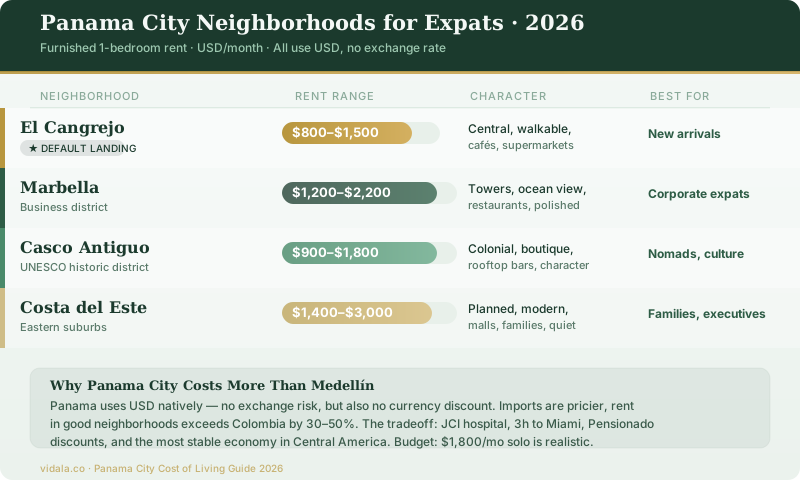
Punta Pacífica and Costa del Este (Premium)
The high-rise waterfront districts. Punta Pacífica has gleaming towers, ocean views, and the JCI-accredited Hospital Punta Pacífica (Johns Hopkins affiliation) around the corner. Costa del Este is the business district equivalent; corporate-feeling, clean, expensive. A furnished 1BR runs $1,200–$2,500/month; 2BR $1,800–$3,500/month. Luxury studios touch $1,500–$2,100/month. This is where executives on relocation packages live and where wealthy retirees who want the cleanest Panama City experience end up.
Best for: Premium budget retirees, corporate expats, those who want the best healthcare access and don’t want to compromise on comfort.
Casco Viejo (Mid-to-High)
Panama’s UNESCO World Heritage colonial district; cobblestone streets, pastel buildings, rooftop bars, and an arts scene that punches above its size. Boutique apartments in restored colonial buildings; 1BR furnished $900–$1,800/month depending on the building. Casco Viejo has gentrified fast; prices are up 20–30% over the past three years. It’s heavy on tourism and lighter on practical grocery infrastructure (nearest real supermarket is a taxi ride away). Great for shorter stays or creative types; less practical for year-round settled life.
Best for: Creative professionals, shorter-stay expats, people who want to live inside Panama’s history.
El Cangrejo, Bella Vista, and San Francisco (Mid-Range: Best Value)
This is the sweet spot for most expats. El Cangrejo in particular has the European-urban feel that expats describe: walkable streets, grocery stores at street level, enough restaurants and cafés that you can live without a car, and solid expat community. San Francisco is slightly quieter and just south; Bella Vista is between them. Furnished 1BR in El Cangrejo: $800–$1,400/month in 2026; 2BR $1,700–$2,400/month. Unfurnished annual leases run 15–25% less.
Booking.com has furnished monthly-rate apartments in El Cangrejo and San Francisco; search for “monthly stays” to find options for your first 30 days while you scout specific buildings and landlords.
Best for: Digital nomads, professionals, younger retirees, anyone who wants the best balance of cost and quality of life in the city.
Albrook and Clayton (Budget-Mid)
Former US Canal Zone territory; wide streets, large lots, suburban feel, quiet. Very different energy from El Cangrejo. Less walkable; car is helpful here. 1BR furnished: $600–$1,000/month; 2BR $800–$1,300/month. Near Albrook Mall, which has everything from home goods to a decent food court. Good option for families who want space and don’t need to be in the urban center.
Best for: Families, those wanting more space per dollar, expats who prefer suburban environment.
Betania and Pueblo Nuevo (Budget)
The most affordable expat-accessible neighborhoods. 1BR: $400–$700/month. Genuinely local; less English spoken, less expat infrastructure, but some of the best Panamanian food in the city. Requires more comfort with Spanish and more street awareness than El Cangrejo.
Best for: Budget-focused expats comfortable with Spanish and local neighborhoods.
Rent: The Numbers
| Apartment Type | El Cangrejo / Bella Vista | Punta Pacífica | Albrook |
|---|---|---|---|
| Studio furnished | $700–$1,000 | $1,000–$1,800 | $500–$800 |
| 1BR furnished | $800–$1,400 | $1,200–$2,500 | $600–$1,000 |
| 1BR unfurnished (annual) | $600–$1,000 | $900–$1,800 | $450–$750 |
| 2BR furnished | $1,700–$2,400 | $1,800–$3,500 | $800–$1,300 |
Important: Panama City leases typically exclude utilities. What you see is the rent; add everything below on top.
Utilities: The Honest Numbers
Utilities are where Panama City surprises people, and almost always unpleasantly. The culprit is electricity.
Electricity: $80–$200+/month
Panama City averages 89°F with intense humidity year-round. Air conditioning is not optional unless you enjoy sleeping in a sauna. Most expats run AC continuously or nearly continuously, especially at night. The electricity bill reflects this. A 1BR apartment with consistent AC use runs $80–$140/month. A 2BR with multiple units running: $120–$200+. This is the number one cost surprise for new arrivals. Build it into your budget from day one.
Water: $20–$40/month Fiber internet: $40–$70/month (Cable & Wireless, Claro, or Tigo; all competitive, all reliable in central neighborhoods) Mobile data: $15–$25/month for a local SIM with 15GB data
Total utilities estimate: $175–$335/month for a 1BR, depending on how much AC you run.
Food and Groceries
Supermarkets
The main chains are El Rey (good value, city-wide), Super 99 (budget-friendly, Panamanian), and Riba Smith (premium, imported goods, expat favorite). All are accessible in El Cangrejo and San Francisco.
Monthly grocery bill for a couple who cooks most meals: $300–$500/month. Local produce is cheap: tomatoes and peppers $0.80–$1.50/lb, plantains, yuca, and local fruits at market prices. Imported US brand goods; cereal, certain cheeses, specialty items; run 2–3× US retail pricing. The people who manage grocery budgets best in Panama City are those who eat local produce and proteins and skip the nostalgia aisle.
Eating Out
Panamanian fondas (local casual restaurants): $5–$9 for a full meal; rice, protein, salad, often juice included. This is the most value-efficient way to eat out in Panama City and the food is genuinely good.
Casual expat-friendly restaurant: $12–$22/person. Mid-range with a bottle of wine: $30–$50/person. Fine dining in Casco Viejo or Marbella: $60–$120/person.
A couple eating out three or four times per week at casual restaurants plus cooking at home: $400–$700/month on food total.
Glovo and PedidosYa delivery apps are active in Panama City; add $3–$6 delivery fee on top of menu prices.
Transportation
Panama City has actual urban infrastructure; one of the few Latin American cities that can say this.
Metro: Two lines (Line 1 north-south; Line 2 extending east). Fare: $0.35/ride. Efficient for El Cangrejo → downtown → Albrook routes. Not yet extensive enough to be your only transport option.
Metrobus: $0.25/ride. City-wide coverage. More crowded; useful for price-conscious short trips.
Uber and Cabify: Reliable and safe in all expat neighborhoods. Most trips cost $3–$10. This is the primary daily transport option for most expats without a car.
Car ownership: Not necessary if you live in El Cangrejo or San Francisco. Useful for weekend trips to Pacific beaches (Coronado, 90 minutes west) or inland destinations. Monthly costs: $400–$600/month for a reliable compact car rental; $80–$200/month for central parking.
Monthly transport budget (no car, metro + Uber mix): $80–$150/month.
The USD Advantage: Panama’s Biggest Selling Point
Panama has used the US dollar as its official currency since 1904. This is worth stating explicitly because it changes the financial calculus in ways that matter:
- No currency exchange fees when moving money from your US bank account
- No currency risk: your $2,000 budget stays worth $2,000 regardless of what the peso or sol does
- No conversion math in your head when pricing things
- Prices don’t spike when the dollar strengthens (common in Ecuador and Colombia)
For US expat retirees managing on Social Security or a US pension, this is significant. Ecuador also uses the dollar, but Panama City’s infrastructure and healthcare quality justify the premium over Quito in ways that Ecuador’s smaller cities don’t.
Even in a USD economy, there are still fees on US bank international debit card transactions. Wise consistently offers better rates for USD-to-USD transfers when sending from a US bank to a Panama bank account; fees under 0.5% vs. $10–$35 flat bank wire fees. Worth using for rent payments and larger transfers.
Healthcare
Panama City has a legitimate healthcare advantage over most of Latin America. Hospital Punta Pacífica holds Joint Commission International (JCI) accreditation and operates under a Johns Hopkins Medicine International affiliation: the only such hospital in Central America. For serious or complex medical care, this matters.
Private healthcare costs are higher than Ecuador but still well below US pricing:
- GP visit: $40–$70
- Specialist: $60–$120
- MRI: $200–$450
- Day surgery: $2,000–$8,000 depending on procedure
Holders of the Panama Pensionado visa receive 15–20% discounts on healthcare services: a real benefit that adds up over time. Full details on qualifying and applying: Panama Pensionado Visa guide.
Health insurance is required for the Pensionado visa and strongly recommended regardless. International plans (Cigna, Allianz) are the standard for expats in the premium bracket. For budget-conscious expats, SafetyWing covers Panama.
Coworking and Internet
Panama City has some of the best internet infrastructure in Latin America; fiber widely available in central neighborhoods, consistent uptime, speeds that handle video calls without issue.
Selina has a location in Panama City that offers day passes (around $20–$30) and monthly memberships ($200–$350 for a dedicated desk). WeWork also has a Panama City presence for those who prefer corporate coworking. Independent options in El Cangrejo include smaller neighborhood coworking spaces at $150–$250/month.
For remote workers, Panama City is reliable infrastructure for work: the concern is cost, not connectivity.
Monthly Budget Summary
This is the table most readers use to decide. All figures for a single person; couple budget in parentheses.
| Tier | Monthly Budget, Single (Couple) |
|---|---|
| Tight (Albrook/Betania, cook at home, metro) | $1,300–$1,700 ($1,700–$2,300) |
| Comfortable (El Cangrejo, eat out 3–4×/week, Uber) | $1,900–$2,600 ($2,600–$3,600) |
| Premium (Punta Pacífica, car, frequent dining out) | $3,500–$5,000+ ($5,000–$7,000+) |
What “comfortable” includes: 1BR in El Cangrejo at $1,000/month, utilities $200/month, groceries $300/month, eating out 3×/week $400/month, transportation $120/month, internet $50/month, miscellaneous $300/month. That’s roughly $2,370/month; within the comfortable range.
How Panama City Compares to Other Expat Destinations
For readers deciding between cities, this is the comparison they’re running:
| City | Comfortable Monthly Budget | Currency | USD Exchange Risk |
|---|---|---|---|
| Panama City | $1,900–$2,600 | USD | None |
| Medellín, Colombia | $1,200–$1,800 | COP | Yes |
| Quito, Ecuador | $1,000–$1,500 | USD | None |
| Cartagena, Colombia | $1,600–$2,500 | COP | Yes |
Panama City costs meaningfully more than Medellín or Quito. What it gives you in return: better English infrastructure, JCI-accredited hospital, USD stability, and a city that functions more like a developed-world city than most of Latin America. Whether that trade-off makes sense depends on your budget and priorities.
For detailed Medellín numbers: Medellín cost of living guide. For Quito: Quito cost of living guide.
If you want Panama but cheaper, Boquete in the mountains runs about 40–50% less than Panama City: a completely different lifestyle but genuinely beautiful.
Taxes for Expats in Panama
Panama has a territorial tax system; one of the most favorable for expats worldwide. Foreign-sourced income (US pensions, Social Security, foreign investment income, remote work for foreign clients) is not taxed in Panama. Only income earned from within Panama is subject to Panamanian income tax.
This is a major differentiator from Colombia (which taxes worldwide income for tax residents) and many other countries. American retirees living on US Social Security and pension income in Panama effectively pay no Panamanian income tax on that income.
US citizens still file US taxes annually regardless of where they live (and the Foreign Earned Income Exclusion applies to earned income, not passive income). For clarity on your specific situation, consult a cross-border tax attorney.
Frequently Asked Questions
Is Panama City actually affordable? It’s mid-range for Latin America; meaningfully more expensive than Medellín, Quito, or Cali, and roughly comparable to Cartagena or Montevideo. It’s genuinely affordable compared to most US cities. Whether it’s “affordable for you” depends on your budget tier; the table above should clarify that faster than any general statement.
Is Panama City safe? Expat neighborhoods (El Cangrejo, San Francisco, Miraflores, Punta Pacífica) are safe with standard urban awareness. Panama City’s crime rates are lower than Colombia’s major cities and comparable to other well-run Latin American capitals. Avoid specific areas downtown at night; locals will tell you which ones.
Do I need to speak Spanish? Less so than any other city in this region. English is widely spoken in the business and service sectors in expat neighborhoods; most supermarkets, restaurants, and services you’ll use regularly have English speakers. That said, even basic Spanish makes daily life smoother and locals appreciate the effort.
Do I need a car? In El Cangrejo or San Francisco, no. The metro, Uber, and walkable streets cover most daily needs. For Albrook, Clayton, or weekend trips to the Pacific coast, useful. For a beach-focused lifestyle, eventually yes.
The Bottom Line
Panama City is the best-infrastructure expat hub in Central America; USD economy, JCI hospital, reliable internet, and a flight network that puts you back in Miami or Houston in 2–3 hours if needed. It costs more than Colombia or Ecuador’s cities, and that premium is real: plan on $1,900–$2,600/month for comfortable single living in El Cangrejo or San Francisco.
The visa question: the Panama Friendly Nations Visa is the fastest path for qualifying Americans; the Pensionado Visa for retirees with qualifying pension income gets you the discount card that shaves 15–20% off healthcare, entertainment, and utilities. Start with a 30-day scouting stay in El Cangrejo, know your budget tier from the table above, and the decision becomes straightforward.
For a full picture of where Panama City fits relative to the rest of the country: Best Places to Live in Panama.
All prices as of early 2026. Panama uses USD; no currency conversion needed.