
A furnished one-bedroom in Laureles rents for $600-900/month. A full sit-down lunch (soup, main, juice) costs $3-5 at a local restaurant. Private health insurance that satisfies Colombia’s digital nomad visa requirement starts at $47/month. At a current exchange rate of around 3,800 Colombian pesos to the dollar (March 2026), your US income goes significantly further here than it did two or three years ago.
This guide breaks down exactly what it costs to live in Medellín in 2026: rent by neighborhood, actual grocery bills, healthcare options, and what three realistic monthly budgets look like in practice. Remote workers considering a 90-day stay, early retirees looking to stretch a pension, or anyone seriously evaluating a longer relocation will find specific numbers here, not averages.
Who this is for: remote workers, digital nomads, and retirees from the US and Europe evaluating Medellín as a base for 1-12+ months.
Medellín in 2026: What’s Changed
The exchange rate is favorable. As of March 2026, 1 USD buys approximately 3,800 Colombian pesos, a rate that has held strong over the past 12 months and represents a meaningful improvement for dollar earners compared to 2022-2023 levels. In practical terms: a $600/month Laureles apartment is costing you around COP 2.28 million. Your money goes far.
The digital nomad visa has gotten stricter. Colombia’s M Visa for remote workers still exists, but starting in mid-2025, the Ministry of Foreign Relations began applying a narrower interpretation: applicants are increasingly required to demonstrate they work in technology or content creation (including online influencers). If you’re a freelance designer, developer, or content professional, you should be fine — but if your remote income comes from fields like consulting, coaching, or finance, verify the current requirements before applying. The income threshold remains approximately $1,400/month (three times Colombia’s minimum wage) from foreign sources.
Safety has continued improving in key expat neighborhoods. El Poblado, Laureles, and Envigado are all considered safe for expats by 2026 standards, with active local business communities and strong pedestrian infrastructure. The wider city still requires neighborhood awareness; this guide covers specifics in the safety section below.
Monthly Budget Overview
Before diving into line items, here’s a quick-reference snapshot. These are single-person budgets; add 40-60% for a couple, though shared rent helps significantly.
| Budget Tier | Monthly Cost | Who It’s For |
|---|---|---|
| Budget | $1,100–$1,500 | Envigado/Sabaneta base, cooking most meals, Metro transport; tight but comfortable |
| Comfortable | $1,600–$2,200 | Laureles apartment, mix of restaurants and groceries, occasional Uber, coworking |
| Expat Lifestyle | $2,500–$3,200 | El Poblado, dining out regularly, travel weekends, gym membership, full comfort |
Most single remote workers and nomads land in the $1,500-2,000 range and consider it plenty comfortable. Medellín isn’t the cheapest city in Latin America. Cuenca, Ecuador and Nicaragua beat it on pure cost. But for the combination of infrastructure, climate, food quality, and lifestyle, it punches above its weight class.
Rent in Medellín by Neighborhood
Rent is your biggest variable. Medellín has several distinct expat-friendly zones, each with a different personality and price point.
El Poblado: Provenza, Manila, Santa María de los Ángeles
El Poblado is where most newly arrived expats land. The neighborhood is dense with cafés, restaurants, coworking spaces, and other English speakers. Parque El Poblado is the social hub; Provenza street is lined with Pergamino Café (some of the best specialty coffee in Colombia) and upscale restaurants.
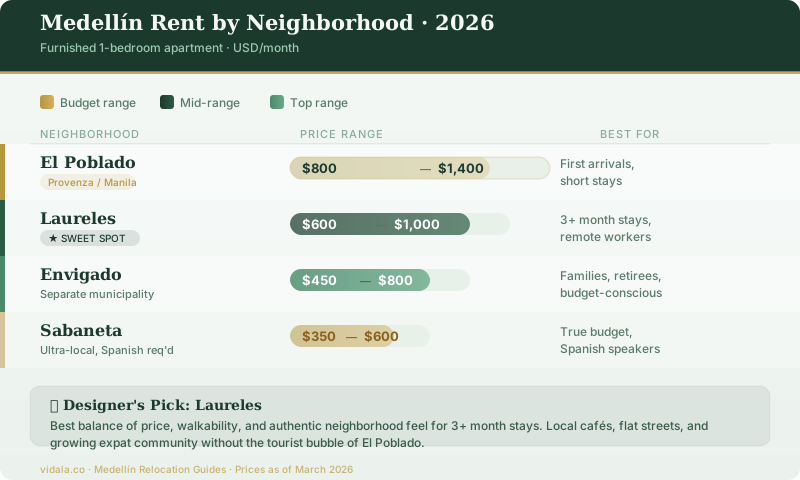
Furnished 1BR: $800–$1,400/month Furnished 2BR: $1,200–$2,500/month
The higher end of those ranges applies to newer buildings with pools, gyms, and concierge, increasingly common in Poblado and popular with shorter-term stays. At $800-1,000 for a decent 1BR, you’re paying a significant premium over Laureles or Envigado for equivalent space.
Best for: First-timers, stays under 3 months, people who want instant community, nightlife access. Honest caveat: It’s the most expat-saturated neighborhood, which drives prices up and creates a bit of a bubble. Parts of Provenza get rowdy on weekends, and petty theft is higher around nightlife zones. After the first month, many people migrate to Laureles.
Laureles: Segundo Parque, Estadio, Suramericana
Most experienced expats will tell you Laureles is the sweet spot. It’s flat (rare in this hilly city), genuinely walkable, and has a neighborhood feel that El Poblado lacks. Tree-lined streets, local Colombian life alongside expat cafés, and substantially lower prices for the same quality of apartment.
Furnished 1BR: $600–$1,000/month Furnished 2BR: $900–$1,500/month
The Segundo Parque area (around the second park; Colombians name streets and areas pragmatically) is the most popular for nomads. Strong café culture; Atom House coworking is nearby. The Estadio and Suramericana end is cheaper and quieter, good for longer stays when you want to feel less like a tourist.
Best for: Remote workers staying 3+ months, anyone who wants authentic city life with expat amenities, couples or pairs splitting rent. Worth knowing: Spanish is more useful here than in El Poblado. Restaurant menus are less likely to have English translations, and your neighbors will be Colombian. This is a feature, not a bug, if you’re trying to actually integrate.
Envigado: Its Own City
This is technically a separate municipality from Medellín, sitting directly south. It’s connected by Metro Line A (10 minutes to El Centro) and shares nothing with Medellín administratively, which is part of why it maintained its own character during Medellín’s more turbulent years.
Furnished 1BR: $450–$800/month Furnished 2BR: $700–$1,200/month
Envigado has a growing expat community (small but cohesive) and a noticeably more local pace. The Parque El Chagualo area and the Avenida El Poblado corridor within Envigado’s borders have good restaurant and café options. Sabaneta (one metro stop further south) bleeds into it and offers even lower prices.
Best for: Budget-conscious expats, families, long-term residents who want a quieter pace, retirees. Practical note: If your social life depends on being in El Poblado frequently, the metro ride is easy but adds up in time. Plan your work routine around proximity to where you actually spend your days.
Sabaneta: Budget Living
The southernmost option in the metro area. Local Colombian character, minimal expat community, cheap rent.
Furnished 1BR: $350–$600/month
If budget is your primary concern and you’re comfortable being the only foreigner at local restaurants, Sabaneta works. It’s not recommended as a first-time base because the lack of expat infrastructure makes the learning curve steeper. But for someone relocating long-term who speaks Spanish and wants to live like a local, it’s legitimate.
El Centro / La Candelaria
Medellín’s historic center is the cheapest option in the city, and the one virtually no expats choose for residential purposes. Infrastructure is old, crime is higher, and the neighborhood lacks the walkability and comfort of the southern zones.
Mentioned here as context only. If you see a listing for COP 1.0M/month in El Centro, that’s why. Skip it.
Neighborhood Comparison Table
| Neighborhood | Furnished 1BR | Vibe | Best For |
|---|---|---|---|
| El Poblado (Provenza/Manila) | $800–$1,400 | Expat hub, nightlife, cafés | First arrivals, short stays |
| Laureles (Segundo Parque) | $600–$1,000 | Local/expat mix, walkable, flat | 3+ month stays, nomads |
| Laureles (Estadio/Suramericana) | $500–$800 | Quieter, residential | Budget-conscious, long-term |
| Envigado | $450–$800 | Calm, local, growing community | Families, retirees, budget |
| Sabaneta | $350–$600 | Very local, minimal expats | True budget, Spanish speakers |
Food and Groceries
Eating Out
Medellín’s food scene rewards people who eat like locals and spend like tourists only occasionally.
Menú del día (set lunch): COP 10,000–23,000, typically $3–$6. This is the backbone of local eating culture: a three-course lunch of soup, main (usually rice, protein, plantain, beans), and juice served at thousands of small restaurants. You won’t find a better value in the city. Restaurante Santas Melonas in El Poblado offers one of the cheapest at around COP 12,000 ($3). Even in higher-traffic areas, lunch shouldn’t cost you more than $6.
Casual restaurant dinner: $8–$15 per person. Medellín has excellent Colombian, Italian, and Asian options across neighborhoods at this price point.
Mid-range / quality dining: $20–$40 per person with drinks. Carmen on Avenida El Poblado is one of the city’s best restaurants in this range. Pergamino Café (El Poblado) is a must for specialty coffee; a latte runs about $3-4.
Realistic monthly food budget:
- Eating out most meals: $350–$500/month
- Mix of cooking and restaurants: $250–$350/month
- Mostly cooking at home: $150–$220/month
Cooking at Home
The main supermarkets you’ll use:
- Carulla: upscale, similar to a mid-market US grocery store, good imported products. Branches in El Poblado and Laureles.
- Éxito: standard supermarket, reliable for everything, good prices.
- La 14: local chain, bulk options, cheapest of the three for staples.
Local produce is cheap. Avocados are absurdly inexpensive (COP 1,000-3,000 each, $0.30-$0.80). Mangoes, papayas, and plantains cost almost nothing. Proteins are reasonable: chicken and pork are cheapest; beef is decent quality at mid-range prices.
Imported goods (European cheese, American cereals, some packaged snacks) cost 30-50% more than you’d pay in the US. Cook Colombian and your grocery bill stays low.
Tip: Plaza Minorista, the city’s main indoor market near El Centro, has the cheapest fresh produce in Medellín. Worth a trip once a week if you’re cooking regularly.
Transportation
Medellín has genuinely good public transit for a Latin American city this size.
Metro: Clean, safe, air-conditioned, runs frequently. One fare: COP 3,050 (~$0.80). The system covers the valley from north to south; Line A is your main route through Laureles, El Centro, and toward Envigado/Sabaneta.
Metrocable: Gondola lines that connect the hill neighborhoods to the main metro stations. Same fare as metro, transfers count as one trip with an integration ticket (COP 4,200). The cable up to Santo Domingo is worth a ride for the view.
Uber / InDrive: Uber is technically operating in a legal gray area in Colombia but widely used by expats. InDrive (where you negotiate the fare) is often cheaper. Most trips within expat neighborhoods: $2–$5. Cross-city: $5–$10.
Street taxis: Available everywhere. Use Uber or InDrive at night; street taxis are more vulnerable to express kidnapping (paseo millonario), a risk that remains real in the city.
Car: Not needed. El Poblado, Laureles, and Envigado are all walkable or easily connected by transit. A car adds expense and the stress of Medellín’s traffic.
Monthly transport budget:
- Metro-primary: $30–$60
- Metro + regular Uber: $60–$100
- Uber-primary (no Metro): $80–$150
Healthcare in Medellín
The Public EPS System
Colombia has public healthcare (EPS) through its social security system. Access requires formal employment or residency with a Colombian company paying into Salud contributions, generally not available to expats on tourist or digital nomad visas. If you eventually get Colombian residency and formal employment, EPS provides comprehensive coverage at low cost.
Private Healthcare Costs
Private care in Medellín is excellent by Latin American standards and dramatically cheaper than the US:
| Service | Medellín Cost | US Equivalent |
|---|---|---|
| GP consultation | $30–$55 | $150–$300+ |
| Specialist visit | $60–$100 | $200–$500+ |
| Emergency room | $50–$200 | $500–$3,000+ |
| Prescription drugs | 40–70% cheaper than US | N/A |
Clínica El Rosario and Clínica Medellín are the main private hospitals used by expats, both modern, well-equipped, and English-friendly in their international patient departments.
Private Health Insurance for Expats
Required if you apply for the digital nomad visa.
- SafetyWing Nomad Insurance: ~$47–$80/month depending on age and coverage tier. Covers emergencies, hospitalization, and many outpatient services. One of the most affordable options satisfying Colombia’s visa requirement.
- Colsanitas / Sura (Colombian providers): $80–$150/month. More comprehensive coverage, better network for long-term residents. Available once you have a visa; requires in-person enrollment.
- World Nomads: $60–$100/month depending on plan.
For a first visit or digital nomad visa period, SafetyWing is the simplest option. Once you’re committed to longer-term residency, switching to a Colombian insurer like Sura makes sense for coverage depth.
Medical Tourism
Medellín is a top destination for medical and dental tourism, drawing patients from across Latin America and increasingly from the US:
- Dental cleaning: $30–$50
- Dental crown: $200–$400 (vs. $800–$1,500 in the US)
- Dental implant: $700–$1,200 (vs. $3,000–$5,000 in the US)
- Lasik eye surgery: $600–$1,000 per eye (vs. $2,000–$3,000 in the US)
The quality at reputable clinics is comparable to US standards. If you’re planning a 3+ month stay, getting dental work done pays for a significant portion of your trip.
Internet and Coworking
Medellín’s digital infrastructure is solid, one of the reasons it’s become a hub for remote workers.
Home internet: Most furnished apartments include fiber internet (50-100 Mbps typical). If you’re paying separately, expect COP 95,000–150,000/month (~$25–$40). Service from Claro, Tigo, and ETB is available throughout expat neighborhoods.
Coworking spaces:
- Atom House (Laureles): popular with the nomad community, strong community events, $100–$160/month
- Selina El Poblado: global brand, reliable but pricier, $150–$200/month; day passes available
- WeWork El Poblado: full corporate setup, hot desks ~$150–$200/month
- Café-working: Pergamino, Café Velvet (Laureles), and dozens of others have fast wifi and good coffee. A viable free alternative for 3-4 hours of work.
→ Best Coworking Spaces in Medellín — full guide
Mobile data: A prepaid SIM with 20GB of data runs about COP 40,000-60,000/month (~$10–$16). Claro has the best coverage across the city and in nearby travel destinations.
Colombia Digital Nomad Visa: Living Here Legally
Standard tourist entry: 90 days, renewable up to 180 days within a 12-month period. Most digital nomads who visit for 1-3 months use the tourist visa and have no issues.
Colombia M Visa (Digital Nomad / Remote Worker): For stays over 90 days or anyone wanting legal work authorization.
Requirements (as of 2026):
- Minimum income: approximately $1,400/month from foreign sources (3x Colombia’s minimum wage; confirm current rate with Cancillería)
- Proof of remote employment or foreign business ownership
- Health insurance (private; SafetyWing satisfies this)
- Valid passport + criminal background check
- Application fee: approximately $52 USD
Application: Online via Colombia’s immigration portal (Cancillería). Processing typically takes 2-4 weeks.
Important 2026 update: Immigration authorities have been applying a stricter interpretation since mid-2025, with emphasis on technology and digital content creation as qualifying professions. If your remote income comes from other fields, consult an immigration attorney before applying. Several Colombia-focused immigration lawyers in Medellín offer consultations for $80-150 USD, worth it before spending time on a visa application that might get rejected.
Tax position: Spend under 183 days/year in Colombia and you have no Colombian income tax obligation. Above that threshold, you may become a Colombian tax resident, relevant for long-term residents planning multi-year stays.
Residency pathway: After 2 years on the digital nomad visa with consistent renewals, you can apply for Colombian permanent residency.
For a complete step-by-step walkthrough of the application process, income documentation requirements, and common rejection reasons, see our Colombia digital nomad visa guide.
Sample Monthly Budgets
Sofia, 32, UX Designer from Portland — $1,380/month
Sofia works remotely for a US company, earns $4,500/month, and came to Medellín for 4 months on a tourist visa to see if she likes it before committing to a digital nomad visa.
| Category | Cost |
|---|---|
| Rent (Envigado 1BR, furnished) | $650 |
| Groceries + eating out | $240 |
| Transport (Metro + occasional Uber) | $55 |
| Health insurance (SafetyWing) | $60 |
| Internet/phone | $40 |
| Entertainment/going out | $150 |
| Coworking (Atom House, 2 days/week) | $75 |
| Contingency | $110 |
| Total | $1,380 |
She’s saving more than she did in Portland, works from cafés most mornings, and eats a $4 menú del día four times a week.
Marcus, 41, Product Manager from London — $1,920/month
Marcus applied for the Colombia M Visa and is based in Laureles for his second year. He likes good coffee, works European hours, and goes out on weekends.
| Category | Cost |
|---|---|
| Rent (Laureles, Segundo Parque, 1BR) | $850 |
| Food (home + restaurants, mix) | $350 |
| Transport (Metro + Uber) | $85 |
| Health insurance (Sura Colombia) | $110 |
| Internet/phone | $50 |
| Entertainment/going out | $250 |
| Coworking (Atom House, full month) | $150 |
| Weekend trip budget | $75 |
| Total | $1,920 |
He spends less than he did in London on rent alone, has a better climate, and takes one weekend trip to Cartagena or the Coffee Region per month.
Robert and Linda, 62, Retired Teachers from Arizona — $3,100/month (couple)
Retired couple considering permanent residency. El Poblado base for first year, exploring whether Laureles or Envigado makes more sense long-term.
| Category | Cost |
|---|---|
| Rent (El Poblado, 2BR) | $1,400 |
| Food (mix of cooking and dining out) | $550 |
| Transport (primarily Uber, no Metro) | $130 |
| Private health insurance (Colsanitas x2) | $240 |
| Internet/phone (x2) | $70 |
| Entertainment/activities/travel | $450 |
| Gym + personal care | $120 |
| Contingency | $140 |
| Total | $3,100 |
They’re spending about what they were in Scottsdale on a substantially higher quality of life: better weather, weekly private Spanish lessons at $15/session, and dental work done at a fraction of US prices.
Medellín vs. Other Expat Destinations
Quick comparison for people evaluating Medellín against its main competitors:
| City | 1BR Rent | Food Budget | Safety Perception | Digital Nomad Visa | Climate | Internet |
|---|---|---|---|---|---|---|
| Medellín | $500–$1,200 | Low–Med | Good (key neighborhoods) | Yes (stricter 2026) | 70–80°F year-round | Strong |
| Bogotá | $600–$1,500 | Low–Med | Moderate | Yes | 50–65°F, grey | Strong |
| Cuenca, Ecuador | $400–$800 | Very Low | Very Good | No specific visa | 60–70°F | Moderate |
| Panama City | $900–$2,000 | Medium | Moderate | Yes | Hot/humid | Strong |
| Lisbon, Portugal | $1,400–$2,500 | Medium | Very Good | Yes | 60–75°F | Strong |
Medellín’s advantage is lifestyle density: the combination of warm weather, good food, strong expat community, solid infrastructure, and affordable cost positions it well for digital nomads and younger retirees. Bogotá is cheaper on rent in some areas but colder and grittier. Cuenca is cheaper overall but quieter and less connected internationally.
Is Medellín Safe for Expats?
The honest answer: far safer than its reputation suggests for expats living in the right neighborhoods, and still a city with real inequality and specific risks that require street sense.
El Poblado, Laureles, and Envigado: All considered safe for day-to-day expat living. Many foreigners spend years here without a serious incident. Muggings are rare in these areas but not zero; standard precautions apply.
Specific areas to avoid:
- La Sierra (hillside community, limited expat access)
- La Candelaria / Niquitao at night (El Centro area)
- Any hillside comunas not specifically mentioned as accessible for tourists
Practical safety habits that experienced Medellín expats use:
- Don’t use your phone while walking on the street in unfamiliar areas
- Use Uber or InDrive at night instead of hailing street taxis
- Don’t wear expensive jewelry or flash laptop bags in isolated spots
- Stay alert in Poblado nightlife zones (Parque Lleras) on weekend nights; tourist targeting happens there
- Join expat Facebook groups early; locals will tell you what’s hot and what to avoid in real-time
The paseo millonario (express kidnapping via taxi) still occurs in Medellín. Uber essentially eliminates this risk because all rides are tracked and driver-verified. Never get in an unmarked taxi.
On the broader picture: Medellín has done genuine transformation work. The city invested in cable cars, public libraries, and escalators in the comunas as part of urban integration. This doesn’t erase economic inequality, but it reflects a real institutional effort that has made the city meaningfully safer over two decades. Don’t let the 1990s reputation (which tourists and news occasionally still invoke) distort your assessment of 2026 Medellín.
Frequently Asked Questions
Is $1,500/month enough to live comfortably in Medellín? Yes, comfortably — in Laureles or Envigado. You’ll have a furnished apartment, eat well (mix of restaurants and home cooking), use the metro, and have a reasonable entertainment budget. In El Poblado on $1,500, it’s tight. You’d have a cheaper apartment in the $700-800 range and less discretionary spending.
What’s the cheapest expat-friendly neighborhood? Envigado for first-timers who want some expat infrastructure at lower prices. Sabaneta for true budget living with mostly local character.
Do I need to speak Spanish? Not in El Poblado; English is widely spoken by staff and you’ll be surrounded by other English-speaking foreigners. In Laureles and Envigado, Spanish becomes increasingly useful and your experience will be substantially richer if you have it. Most expats who stay 6+ months pick up conversational Spanish just from daily life.
Can I work remotely from Medellín legally? For up to 90 days, yes — tourist visa covers it. For longer stays, the Colombia M Visa (digital nomad visa) is the legal route. See the visa section above for 2026 requirements and the tightened enforcement context.
How do I transfer money to Colombia? Wise is the standard recommendation: typically under 1% fee vs. 3-5% with your bank’s international wire. You’ll be converting USD to COP regularly; use Wise for the best rates. Remitly is another option. Avoid exchanging cash at airport kiosks; the spread is terrible.
Where do I find apartments?
- Short-term (1-3 months): Airbnb or Booking.com (filter for “monthly stay” discounts, often 20-30% off weekly rates)
- Medium-term (3-12 months): Facebook groups “Medellin Apartments for Expats,” “Medellin Housing for Foreigners”, direct from landlords, no agency fees
- Long-term: Local real estate agencies like RE/MAX Medellín or Coldwell Banker Colombia; requires Colombian bank account or co-signer in some cases
When is the best time to arrive? Medellín has two drier seasons (Dec-Feb and Jun-Jul) and two wetter seasons (Mar-May and Sep-Nov). “Weather” is somewhat academic; the climate is warm and pleasant year-round at ~70-80°F. Arrive in January or February if you want to land in peak sunshine; arrive any month and you’ll adapt quickly.
What This Actually Costs
Medellín in 2026 is not a sacrifice destination. The city has real infrastructure, a genuine food culture, fast internet, excellent healthcare at a fraction of US prices, and one of the best climates in the Americas. At $1,500-2,000/month for a single person, you’re living at a quality level that would cost $4,000-5,000+ in a comparable US city.
The catches are real: the digital nomad visa process has gotten more complicated, street sense matters, and El Poblado can feel like an expat enclave that doesn’t reflect the actual city. Laureles is the smarter base for most people once they’ve been in Poblado for a month and want more texture.
Concrete next steps:
- Book a 30-day trial: filter for Laureles or El Poblado monthly stays. Thirty days costs more than a full-term lease but gives you time to find a direct apartment without committing blind.
- Sort health insurance before you arrive: SafetyWing covers you immediately; apply before departure.
- Join the expat communities: “Medellin Expats” and “Internations Medellín” Facebook groups are active and useful. Real questions answered by people currently there.
- Plan your visa before 90 days is up: If you like it and want to stay longer, start the digital nomad visa process at week 6, not week 12. Processing takes time.
Related guides:
Prices in this guide are accurate as of March 2026. Exchange rate used: approximately 3,800 COP/USD. Rental prices sourced from Numbeo, TheLatinvestor, Expatistan, and active Facebook marketplace listings. Visa requirements sourced from Colombia’s Cancillería and verified via immigration attorneys’ published guidance. Always confirm visa requirements directly with the relevant authority before applying.