
Retiring in Boquete, Panama: The Complete 2026 Expat Guide
Every January at the Feria de las Flores, Boquete fills with orchids and birds-of-paradise and the kind of cheerful, slightly chaotic energy that comes from a small Chiriquí mountain town doing what it loves. But what draws 3,000–5,000 expats to this highland valley 1,200 meters above sea level isn’t the flower festival. The draw is the weather: 65–75°F (18–24°C) year-round, no air conditioning required, evenings cool enough for a light jacket. And the numbers: a comfortable retirement budget of $1,500–$2,200/month for a couple, compared to $2,500–$3,500 in Panama City.
Boquete consistently ranks among the top retirement destinations in the world in the International Living index, and for once that ranking isn’t hype. But it’s a specific kind of place for a specific kind of retiree. This guide gives you the real picture: the costs, the community, the healthcare logistics, and the honest downsides.
Why Boquete? The Case for Panama’s Mountain Retirement Town
The Climate: Why Retirees Come Here First
The single biggest draw is simple: it never gets hot. Boquete sits at 1,200m (3,900 ft) altitude in the Chiriquí Highlands, which keeps daytime temperatures in the 65–75°F (18–24°C) range every month of the year. Evenings drop to around 59–63°F (15–17°C), cool enough to sleep comfortably without fans.
Compare that to Panama City, where it’s 85–95°F and 90% humidity, and you’re running AC constantly from April through December. No AC in Boquete means electricity bills of $25–$60/month instead of $80–$200. That $100–$150/month difference is real money, and most people who’ve lived in both places say the comfort advantage is even bigger than the financial one.
Two seasons: dry season runs December through April (clear mornings, blue skies, peak scouting-trip season). Rainy season (May–November) brings afternoon showers, usually 2–4 hours, and mornings that are still sunny. It’s not the all-day monsoon some imagine. The coffee and flowers thrive in it.
One thing Boquete gets right that Bogotá, Colombia doesn’t: at 1,200m, there’s no altitude adjustment period. Bogotá at 2,600m takes weeks for some retirees, especially those with respiratory or cardiac conditions. Boquete is high enough for cool weather, low enough to be comfortable from day one.
The Expat Community
Boquete has one of the largest English-speaking expat communities in Central America, with estimates ranging from 3,000–5,000 in the broader Chiriquí area and the majority concentrated around Boquete town. The community is predominantly North American and European: US, Canadian, British, German. Most are retirees in their 60s–70s, though digital nomads have added a younger layer over the past few years.
The social infrastructure is real. There’s a Tuesday Market (expat community market with local vendors and farmers), weekly hiking groups, birding clubs, active Facebook groups (Boquete Expats has thousands of members), and churches with English-language services. Clínica Especializada del Dr. Chen is the go-to private clinic among expats, and English-speaking contractors, dentists, and service providers have built practices around the community.
The honest flip side: some expats describe Boquete as “too expat,” meaning you can live here for years and mostly only know other North Americans. If you want to integrate into Panamanian culture rather than expatriate culture, this is something to consider. Spanish helps enormously outside the tourist-and-expat commercial core.
Honest Cons
It’s a small town. The restaurant scene is limited (maybe 15–20 places worth returning to). Cultural events are few. If you’re accustomed to city life with museums, live music, and professional sports, Boquete will feel quiet within a few months.
Healthcare has a ceiling in town. More on this below, but the short version: routine care is fine in Boquete, serious care goes to David (45 minutes), complex surgery to Panama City.
Peak-season traffic. December through February, when dry-season visitors and seasonal residents descend, the main road through Bajo Boquete can back up for 20–30 minutes. Not an urban nightmare, but annoying in a town this size.
Internet varies by location. Fiber is available in central Boquete from Cable & Wireless, with 15–50 Mbps typical. Go 10 minutes into the hills toward Jaramillo or Volcancito and speeds can drop significantly. If remote work matters, test the connection before signing a lease.
Cost of Living in Boquete
The biggest cost advantage Boquete has over Panama City is rent and electricity. Everything else (groceries, restaurants, local services) is modestly cheaper or roughly similar.
| Expense | Boquete | Panama City |
|---|---|---|
| 1BR furnished apartment (rent) | $500–$900/month | $700–$1,200/month |
| 2BR house (rent) | $700–$1,200/month | $900–$1,600/month |
| Electricity | $25–$60/month (no AC) | $80–$200/month |
| Groceries (couple/month) | $200–$350 | $250–$400 |
| Restaurant meal, local | $5–$10 | $8–$15 |
| Internet | $35–$60/month | $40–$70/month |
| Taxi (in-town) | $2–$4 | $3–$8 |
| Comfortable couple, monthly total | $1,500–$2,200 | $2,500–$3,500 |
The electricity line deserves emphasis. A 2-bedroom home in Boquete typically runs $25–$60/month in electricity, a figure that came up repeatedly in my research and from expat reports. In Panama City, the same household running AC year-round pays $80–$200. That’s a $1,200–$1,800/year difference before you count anything else.
Panama uses USD, so there’s no currency risk, no exchange math, no conversion headaches for US expats. What you see is what you pay.
For a full breakdown of what everyday costs look like in Panama’s capital, see the Panama City cost of living guide, useful if you’re weighing urban Panama against the mountain option.
Neighborhoods in Boquete
Most articles treat Boquete as one place. It isn’t: the neighborhoods have distinct characters and different price points.
Downtown Boquete (Bajo Boquete): The commercial center. Restaurants, grocery stores (Romero supermarket, the Tuesday Market), banks, the central square. Most walkable area; you can live car-free here, though it limits your options. Rent for a furnished 1BR: $600–$900/month. Noisier and more traffic during peak season.
Alto Boquete / Jaramillo / Volcancito: Higher altitude, cooler, quieter. Larger homes with gardens, mountain views, more land. This is where retirees who want space (a vegetable garden, chickens, a view of Volcán Barú) tend to land. Houses for $700–$1,500/month. Internet can be unreliable depending on exact location; worth checking.
Palmira: 10–15 minutes from downtown, mix of Panamanian and expat residents. Often best value: larger homes for $600–$1,000/month, quieter than downtown, still reasonably convenient. Less socially concentrated than the expat-heavy center.
Valle Escondido: Gated resort-style community within Boquete, with a pool, tennis courts, restaurant, and security. Rent and purchase prices are higher; this is premium Boquete. Popular with retirees who want amenity infrastructure without leaving town. Good fit if you value organized social activities and hotel-level maintenance.
Volcancito: North of downtown, residential, a bit further from the commercial strip. Mix of Panamanian families and expats. Quieter. Car is definitely needed. Some of the best value larger houses in the Boquete area.
My recommendation: rent first, for at least six months, before buying. The neighborhood that sounds right on paper and the one that’s right for your daily life are sometimes different. Boquete is small enough that you can experience multiple areas on a scouting trip.
Real Estate in Boquete
Foreigners can purchase property in Panama with full ownership rights, the same legal standing as Panamanian citizens. There’s no restriction on property type, location, or size.
Renting first (recommended). Short-term furnished housing for your first 30–60 days: Airbnb and Booking.com have furnished homes and apartments available in Boquete with monthly-rate options. Search Boquete monthly rentals on Booking.com to compare options before committing to an annual lease. Expect $1,500–$2,500/month for a furnished house on short-term; $600–$1,200/month on annual lease.
Annual lease resources: BoquetePanama.com listings, local Facebook groups (Boquete Expats, Boquete Housing), and Trova realtors. Local realtors often know unlisted inventory that never makes it online.
Buying. Purchase prices run $150,000–$350,000 for a 3BR house in established expat areas; Valle Escondido lots from $80,000; higher-end homes $500,000+. Boquete real estate has appreciated over the past decade, but it’s not a speculation play. The people buying here are doing it to live, not to flip.
The Pensionado discount on real estate: Pensionado visa holders receive a 25% discount on property transfer taxes and a 50% discount on closing costs. On a $250,000 purchase, that’s real money. See the full Panama Pensionado Visa guide for eligibility details.
Always hire a local real estate attorney ($500–$1,500 in fees) independent of your realtor. An independent property inspection is worth it too: drainage, structural, title verification.
Healthcare in Boquete
This is the section most Boquete guides either skip or soft-pedal. I’ll be direct.
In Boquete: Clínica Especializada del Dr. Chen is the preferred private clinic among expats, with GP visits running $20–$50 and functional English. Policlínica de Boquete handles routine care too. For dental work, Boquete has several English-speaking dentists at prices 40–70% below US rates, a legitimate dental tourism opportunity.
David (45 minutes away): Hospital Chiriquí is a private hospital with specialist departments, surgery suites, and 24-hour emergency care. This is where Boquete expats go for anything requiring imaging, specialist consultation, or hospitalization. The drive is straightforward on the Pan-American Highway; not a mountain road situation, just 45 minutes. Most expats budget for a car partly for this reason.
Panama City (5 hours by road or 1-hour Air Panama/Copa flight): Hospital Punta Pacífica is Johns Hopkins International affiliated and handles complex procedures. Flights from David’s Enrique Malek Airport (DAV) to Tocumen (PTY) run about $150–$250 roundtrip. For non-emergency serious care, flying is the practical route.
The 45-minute drive to David is logistics to plan for, not a deal-breaker, but it requires planning. Retirees with pre-existing conditions requiring frequent specialist visits should factor in the time and cost of those drives. Medical evacuation insurance, included in most international health plans, covers transport to Panama City or abroad for critical situations.
For insurance, SafetyWing Nomad Insurance starts around $47/month and covers emergency care including evacuation, appropriate if you’re in the exploration phase or on a budget and in generally good health. For long-term retirement coverage, Cigna Global offers comprehensive plans covering Panama, US emergencies, and specialist care, the better fit for most retirees 60+ with existing health considerations. Allianz Care is another solid international option at similar price points.
Pensionado visa holders get 10–20% discounts on medical consultations and procedures at participating clinics in Panama, including in David.
Medicare does not cover medical care in Panama. If you’re relying on Medicare, budget for an out-of-pocket supplement or switch to a private international plan before your move.
Getting to Boquete and Getting Around
From Panama City: Options are a 6–7 hour direct bus (Terminales de David bus line, around $15–$20), or a 45-minute flight (Air Panama or Copa codeshare to David, $100–$200 one-way), then 45-minute taxi or bus from David to Boquete. The flight is worth it for scouting trips; the bus is fine for a relaxed relocation.
Getting around Boquete itself: Central Boquete is walkable: groceries, restaurants, the Tuesday Market, the main square. For anything beyond the center, you’ll want a car. The road system in Boquete’s outer neighborhoods is paved but narrow, and 4×4 is genuinely useful in rainy season for higher-elevation areas.
Car ownership costs $300–$500/month (insurance, gas, maintenance) for a reliable vehicle. Taxis within town are $2–$4 for most trips. Uber doesn’t operate in Boquete, but local taxi drivers are reliable and most know the expat community well.
Your international driver’s license is valid for up to 90 days. After that, a Panamanian license is required, a relatively straightforward process at the traffic authority office in David.
Visa Options for Retiring in Boquete
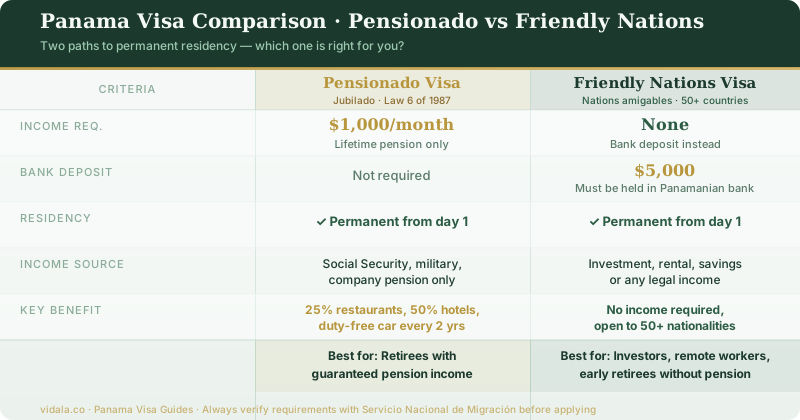
Two visas dominate for retirees:
Pensionado Visa — the most popular path for anyone with Social Security or pension income. Requirements: $1,000/month from a lifetime qualifying pension, a stack of certified documents (birth certificate, background check, proof of pension, passport). Grants permanent residency from day one and unlocks the famous discount card. See the complete Panama Pensionado Visa guide for the full application walkthrough, document checklist, and discounts list.
Friendly Nations Visa — if your income is from investments, rentals, dividends, or you don’t have a lifetime pension, this is your route. Requirements: passive income or a property/bank deposit. See the Panama Friendly Nations Visa guide.
There’s also the Reforestation Visa — invest $40,000+ in a certified reforestation project, receive permanent residency. Less common, and I wouldn’t pursue it without thorough due diligence on the specific project.
For most Social Security recipients, the Pensionado Visa is the clear choice. The income threshold ($1,000/month) is below the average 2026 Social Security benefit for married couples, and the discount benefits are substantial, worth thousands per year over a long retirement.
Activities and Lifestyle
Boquete runs on coffee, birds, and trails. This is not a beach town, not a party town, and definitely not a city. But within its lane, the lifestyle is genuinely excellent.
Coffee: Boquete is one of the world’s premier coffee regions, home of the Geisha varietal (the auction-price beans Starbucks Reserve brags about). Finca Lerida and Kotowa Coffee Estate offer tours, half-day experiences that get into the processing and tasting. If you drink coffee, you’ll develop opinions here.
Hiking: Volcán Barú (3,474m) is the highest point in Panama and one of the few places in the world where you can theoretically see both the Pacific and Atlantic Oceans on a clear day. The pre-dawn summit hike (guided tours available, about $40–$60) is hard at 8–10 hours roundtrip, but doable for fit retirees. The Quetzal Trail and Los Quetzales trail (connecting Boquete to the cloud forest on the Pacific side) are more accessible. Both are well-marked.
Birding: Over 400 species in the Chiriquí Highlands. The resplendent quetzal — the holy grail of Central American birding, a brilliant green bird that most birders never see in the wild — is reliably spotted in Boquete from January through April. Birding is one of the most active and social expat pursuits here; local guides like Feliciano González are known internationally.
Rafting: Río Chiriquí and Río Chiriquí Viejo offer Class II–IV whitewater. Several local operators run half-day trips starting around $60–$90/person.
Social life: The Tuesday Farmers’ Market, weekly expat meetups, Feria de las Flores in January, jazz festival. The calendar keeps moving. The social scene is smaller than a city but more connected than most places this size.
Frequently Asked Questions
Is Boquete safe? Yes. It has a very low crime rate by Panama standards, which are already modest compared to regional neighbors. The expat community uniformly describes feeling safe walking around. Standard awareness applies: don’t leave valuables visible in a car, be aware in unfamiliar areas after dark. Day-to-day life in Boquete is comfortable and low-stress on the safety front.
Do I need to speak Spanish? Less so than most places in Latin America. In central Boquete, most service providers who work with expats speak some English. But outside the tourist core (government offices, some medical contexts, most Panamanian-owned businesses) Spanish is the operating language. Conversational Spanish makes daily life much smoother and opens the door to the local community. Expats who learn it say it transformed their experience.
How does Boquete compare to Cuenca, Ecuador? Both are highland mountain towns with established expat communities and similar cost-of-living ranges. Cuenca is a larger city (400,000+ people) with more urban amenities: a real arts scene, better restaurant variety, public hospitals. Boquete’s advantages: more consistent weather, stronger English-language infrastructure, Panama’s USD economy with no currency risk, and the Pensionado discount program. For retirees who want a more urban experience, Cuenca wins. For those prioritizing climate, English community, and Pensionado benefits, Boquete is hard to beat.
What’s the internet like? Good in central Boquete. Cable & Wireless offers fiber connections with 15–50 Mbps typical speeds, around $35–$60/month. In higher and more remote neighborhoods (parts of Jaramillo, Volcancito), speeds can be 5–15 Mbps. If remote work or heavy streaming is important, ask for a speed test before signing a lease. Satellite backup (Starlink is available in Panama) is worth considering for outlying properties.
Can couples with different activity levels both be happy here? In my reading of dozens of expat accounts, yes, but with a caveat. The active types (hikers, birders, coffee tourists) have no shortage of options. The less active can fill days with social events, the Tuesday Market, local restaurants, and exploring the valley. The challenge is if one partner thrives in the small-town quiet and one finds it isolating after six months. Do a 30-day trial before committing.
Is Boquete Right for You?
Boquete is a real retirement gem for a specific profile: retirees who want perpetual spring weather, a strong English-speaking community, low costs, and access to Panama’s outstanding Pensionado visa benefits. That combination is genuinely hard to find anywhere else in Latin America.
The honest caveats: it’s a small town, and you need to be genuinely comfortable with that. Healthcare logistics (45 minutes to David for serious care, Panama City for complex procedures) require planning and good international insurance. And the rainy season, May through November, means adapting to afternoon showers.
Best next step: Plan a scouting trip during dry season (December–February), 30 days if you can manage it. Rent a furnished place through Booking.com, hit the Tuesday Market, take a coffee tour, do one hike, and get a sense of whether this pace of life feels right. That’s how most people confirm what they already suspect.
For the visas that make Boquete work financially, start with the Panama Pensionado Visa guide, and if that doesn’t fit your situation, the Friendly Nations Visa guide. For city comparisons and a broader look at Panama relocation options, see Best Places to Live in Panama.