
Cost of Living in Quito, Ecuador: A Real 2026 Budget Breakdown
Quito sits at 2,850 meters — the highest capital city in the world after La Paz. That altitude is also why you’ll never have an air conditioning or heating bill. The climate holds around 55–65°F year-round with afternoon sun most days and brief rainy seasons in spring and fall. Ecuador uses the US dollar, so there’s no exchange rate to track.
This is a numbers article for people building an actual relocation budget. Here’s what Quito costs in 2026.
Monthly Budget Summary: Numbers First
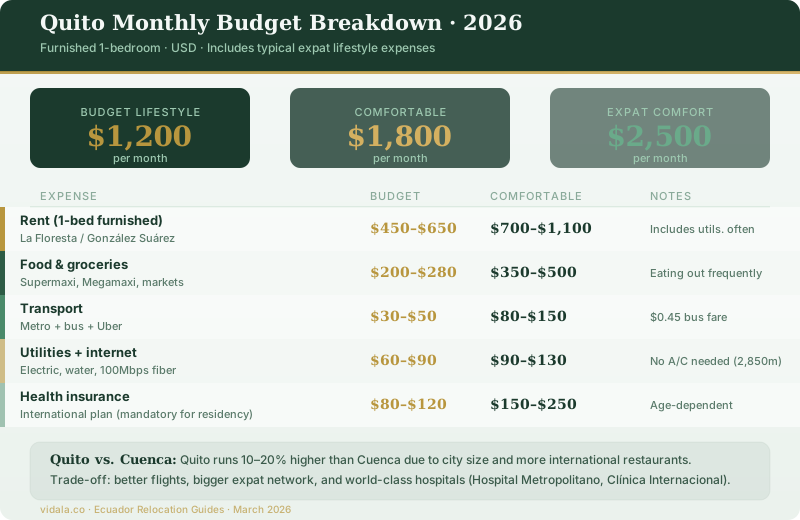
| Expense | Budget Single | Comfortable Single | Budget Couple | Comfortable Couple |
|---|---|---|---|---|
| Rent (furnished) | $350–$550 | $600–$1,000 | $500–$800 | $800–$1,400 |
| Groceries | $120–$180 | $200–$320 | $200–$300 | $300–$500 |
| Utilities (electric, water, internet) | $60–$100 | $80–$130 | $80–$130 | $100–$160 |
| Healthcare / insurance | $60–$120 | $100–$200 | $120–$240 | $200–$400 |
| Dining out | $80–$150 | $150–$300 | $150–$300 | $300–$600 |
| Transport | $20–$40 | $40–$80 | $30–$60 | $60–$120 |
| Entertainment / misc | $80–$150 | $150–$250 | $120–$200 | $200–$400 |
| Total | $770–$1,290 | $1,320–$2,280 | $1,200–$1,830 | $1,960–$3,580 |
Practical summary: A single person lives comfortably in Quito for $1,300–$1,800/month. A couple, $1,800–$2,500/month. Budget lifestyle for a couple is achievable at $1,200–$1,500/month, doable if you live in a mid-range neighborhood, cook most meals at home, and use public transit. Each line item is detailed below.
Rent in Quito: Neighborhood by Neighborhood
Quito’s rental market is not uniform. The northern residential areas (La Floresta, La Carolina, González Suárez) run meaningfully higher than Centro Histórico or southern suburbs. Valley neighborhoods like Cumbayá require a car but often offer newer buildings at comparable prices to northern Quito.
La Floresta
The top choice for digital nomads and younger expats. La Floresta has Quito’s most concentrated café and restaurant scene: the kind of neighborhood where you can work from a coffee shop, walk to a Saturday market, and find live music by evening. It borders Parque El Ejido and has good walkability by Quito standards.
Rent: 1BR furnished $350–$550/month; 2BR furnished $450–$650/month
Buildings are a mix of older houses converted to apartments and newer mid-rise blocks. Older units are cheaper but inspect plumbing and hot water before signing. Newer La Floresta units cluster toward the top of that range.
Best for: Digital nomads, 20s–40s, people who want to walk everywhere and be near food and social life.
La Carolina / González Suárez
The upscale residential district north of La Floresta. Parque La Carolina (Quito’s biggest urban green space) anchors this area. Embassy row, the Condado Shopping mall, and El Jardín mall are all close. More polished than La Floresta, slightly less neighborhood character.
Rent: 1BR furnished $600–$1,000/month; 2BR furnished $900–$1,500/month
High-rise apartments with concierge, parking, and sometimes pools are common in González Suárez. This is where Quito’s professional expat class concentrates.
Best for: Families, business travelers, people who want high-amenity urban living.
Cumbayá / Tumbaco (The Valley)
East of central Quito, accessed by the Ruta Viva highway. Cumbayá and Tumbaco sit in the Tumbaco Valley at a lower altitude than central Quito, noticeably warmer (10–15°F warmer on average), sunnier, and drier. International schools cluster here. It’s suburban in a way that central Quito isn’t.
Rent: 1BR furnished $500–$900/month; 2BR or house $800–$1,600/month
A car is essentially mandatory unless you’re comfortable taking taxis ($8–$15 each way to central Quito) or the occasional bus. Commute to central Quito: 20–40 minutes depending on traffic.
Best for: Expat families with children in international schools; people who prefer warmer weather and suburban comfort over urban density.
Centro Histórico (Old Town)
Quito’s UNESCO World Heritage core: colonial churches, cobblestone streets, the cheapest central rents in the city. The Basílica del Voto Nacional, the main food market, and the government district are all here.
Rent: 1BR furnished $300–$500/month
Honest caveat: Centro Histórico has more street crime than northern Quito, particularly at night. Fine during the day (tourists walk it constantly), but after dark, the blocks between the main plazas warrant more caution than La Floresta or La Carolina. Most long-term expats choose it for a cultural immersion period and then move north.
Best for: Short trial stays; budget-focused expats comfortable with urban caution; cultural immersion seekers.
San Rafael / Valle de los Chillos
Southern valley suburb, cheaper than Cumbayá with a more local, residential feel. Less expat infrastructure but good quality of life for people comfortable with Spanish and local-market living.
Rent: 1BR furnished $350–$600/month
Best for: Budget-conscious expats who don’t need expat social infrastructure; people who want a quieter, more Ecuadorian daily life.
Quick Quito vs. Cuenca Rent Snapshot
| Apartment Type | Quito | Cuenca |
|---|---|---|
| 1BR furnished, expat area | $450–$750 | $350–$650 |
| 2BR furnished, mid-range | $700–$1,100 | $600–$900 |
Cuenca runs roughly 15–20% cheaper than Quito for comparable apartments. Quito’s premium buys you direct international flights, more specialist healthcare options, and bigger-city business and social infrastructure.
Groceries and Food Costs
Markets vs. Supermarkets
Mercado Central (historic market, downtown) has the cheapest produce and the best variety of local foods. A week of fresh produce for two: $15–$25. Worth visiting even if you do most shopping elsewhere.
Supermaxi is the most popular supermarket with expats: best selection of international and imported items, accepts credit cards. A weekly run for two (local staples plus some imported items): $40–$60.
Mi Comisariato and Santa María are mid-range chains, competitive on locally produced goods.
Sample grocery prices (2026):
| Item | Price |
|---|---|
| 12 eggs | $1.80–$2.20 |
| 1 liter whole milk | $0.90–$1.10 |
| 1 kg chicken breast | $3.50–$5.00 |
| 1 kg tomatoes (market) | $0.50–$0.80 |
| Avocado (each) | $0.25–$0.50 |
| Loaf of bread | $1.00–$1.80 |
| Local beer (store) | $0.80–$1.20 |
| Decent local wine (bottle) | $6–$12 |
A week of groceries for two (eggs, chicken, vegetables, bread, milk, fruit, beer, cooking oil) runs $40–$55 at Supermaxi. Add imported cheese, wine, or specialty items: $60–$80.
Eating Out
- Almuerzo (set lunch) at a local restaurant: $2.50–$4.00 (soup, main, juice, sometimes dessert)
- Mid-range restaurant dinner: $8–$15 per person
- International restaurant (Thai, Japanese, Italian): $12–$25 per person
- Coffee (Quito has excellent local coffee culture): $1.50–$3.00
- Beer at a bar: $1.50–$3.00
A couple eating out 3–4 times per week (a mix of local almuerzos and mid-range dinners) spends $200–$350/month on restaurants.
Utilities
Electricity
Ecuador’s grid is substantially hydroelectric; rates are low. An average apartment in Quito (no AC, no electric heat) pays $15–$40/month. Heavy users (electric stove, dehumidifier, home office setup): $40–$70/month. At 2,850 meters you’ll never run AC, which is the main reason these bills are so low.
Water
Monthly water bill: $5–$15. Tap water in modern apartments in northern Quito is generally treated and safe for brushing teeth and cooking; many expats still use a countertop filter for drinking: $15–$30/month.
Internet
Main fiber ISPs: CNT (state-owned), Netlife, Telconet. 100–300 Mbps fiber plans: $30–$50/month. Coverage is solid in La Floresta, La Carolina, and Cumbayá. Centro Histórico can be patchier; verify the specific building’s connection before signing a lease.
Cell Phone
Claro and Movistar prepaid plans with data: $15–$25/month. Postpaid plans (after obtaining your cédula): $20–$40/month with unlimited data.
Healthcare Costs
Quito has the best private healthcare in Ecuador. This is a meaningful advantage over other Ecuador cities.
Private Hospitals
Hospital Metropolitano is the top private hospital in Quito: English-speaking staff, modern equipment, and joint educational programs with Johns Hopkins. Doctor consultations: $35–$70. Specialist consultations: $60–$120. Surgery is typically 20–40% of US costs.
Hospital de los Valles is in Cumbayá, modern and well-equipped, popular with expat families in the valley. Comparable quality to Metropolitano.
Clínica Pichincha is a well-established private clinic in central-north Quito, reliable for routine care.
For routine needs (a GP visit, prescription refill, blood test), expect $35–$70 paid out of pocket at a private clinic. Prescription medications run 40–60% of US prices.
IESS Public Healthcare
Legal residents can enroll in Ecuador’s IESS (public social security system). Contribution: approximately 17.6% of your declared monthly income. At the visa income threshold ($1,458/month), that’s about $257/month. IESS covers public hospitals: good for routine care, longer wait times for specialists. Most expats use IESS as a backstop and pay out of pocket for private care when speed matters.
Health Insurance for Your Visa
Ecuador’s 2026 visa regulations require proof of health insurance at the time of application. SafetyWing satisfies this at $47–$80/month depending on age. Most expats start with SafetyWing for the visa application, then switch to local plans (BMI Ecuador, Humana Ecuador: $100–$250/month for a couple) once established.
Transport in Quito
Metro de Quito
Quito’s metro opened in 2023. Line 1 runs north–south through the city. Fare: $0.45/ride. For people living in La Floresta or La Carolina, the metro cuts cross-city transit from 45+ minutes by bus to 20 minutes on key routes. It’s genuinely useful and still underreported in most expat guides.
Buses
The Trolebús, Ecovía, and MetroBus lines cover the city at $0.30–$0.45/ride. Slower and more crowded at rush hour than the metro. Useful for routes the metro doesn’t cover.
Rideshare and Taxis
Uber, InDriver, and Cabify all operate in Quito. Cross-city ride: $3–$8. Airport to city center (official taxi): $25–$35. InDriver often runs cheaper than Uber for local trips.
Car Ownership
Not needed in La Floresta or La Carolina. Essential in Cumbayá. Fuel: $2.50–$3.00/gallon (subsidized). Monthly parking: $30–$80.
Quito vs. Cuenca: The Honest Comparison
| Factor | Quito | Cuenca |
|---|---|---|
| Rent (1BR furnished, expat area) | $450–$750 | $350–$650 |
| Groceries | Similar | Slightly cheaper at local markets |
| Dining options | More variety, similar per-meal cost | Fewer options, slightly cheaper |
| Healthcare | Hospital Metropolitano — best in Ecuador | Santa Inés, Hospital del Río — very good |
| Transport | Metro + rideshare | Cheap taxis, smaller scale |
| International flights | Direct to US (MIA, JFK, IAH, LAX) | Connect via Quito or Guayaquil |
| Overall budget (couple, comfortable) | $1,800–$2,500 | $1,600–$2,200 |
Cuenca is roughly 15% cheaper and genuinely quieter. Quito offers more: more restaurants, more business and career opportunity, direct international flights, and Ecuador’s best specialist healthcare. Choose based on whether maximum affordability (Cuenca) or big-city infrastructure (Quito) is the priority.
Full Cuenca breakdown: Cuenca, Ecuador: The Complete Expat Guide
The Expat Community in Quito
Quito’s expat community is smaller and less organized than Cuenca’s. Cuenca has a concentrated retirement community; Quito’s expats are more dispersed across neighborhoods and life stages. But the infrastructure exists:
Internations Quito: the global expat social network has an active Quito chapter with regular meetups (monthly drinks, professional networking events, cultural tours). Good for first-contact social connections.
Quito Expats on Facebook: the most active community for practical questions. Visa referrals, landlord recommendations, doctor referrals, neighborhood advice. Search before posting; the archive is substantial.
r/Ecuador on Reddit: smaller but useful for outsider-perspective questions. More candid than Facebook groups on safety and quality-of-life tradeoffs.
Language exchanges: La Floresta and La Carolina have several cafés that run weekly Spanish-English exchanges. Useful for both language practice and meeting local Ecuadorians.
Quito’s expat community skews younger and more professionally oriented than Cuenca’s retiree-heavy population. If you’re 30–50 and working remotely or doing business in Latin America, Quito’s social environment fits better. If you’re 65+ and retired, Cuenca’s community infrastructure is more purpose-built for that stage.
Coworking in Quito
The coworking scene has grown since 2020. Good options in La Floresta and La Carolina:
- Impaqto Quito: the most established local coworking chain; locations in González Suárez and Cumbayá; $150–$200/month for a dedicated desk
- The Hub Quito: La Carolina area; community-focused, event programming
- Cafés in La Floresta (Café Galletti, several unnamed spots near Parque El Ejido) work fine for async remote work; call-heavy workers need a proper coworking space for reliability
Day Trips and Getting Out of Quito
One advantage of Quito’s central location: it’s a launching point for most of Ecuador.
Mitad del Mundo — 30 minutes north. The equatorial monument and surrounding village. Tourism infrastructure around it; the nearby Inti Ñan museum marks the actual GPS equator line. Worth a half-day.
Mindo cloud forest — 2 hours northwest. Birdwatching (the cloud forest has 500+ species), zip-lining, butterfly houses, tubing on the river. Popular weekend trip for Quito residents.
Quilotoa Crater Lake — 3 hours south. A stunning crater lake at 3,900 meters. The full loop hiking trail around the rim takes 3–5 hours. One of Ecuador’s best day trips.
Baños de Agua Santa — 3–4 hours south. Adventure sports, thermal baths, taffy shops, and views of Volcán Tungurahua. Popular with younger expats.
Galápagos — flights from Quito (UIO) to the islands run $300–$500 round-trip. Quito is the most practical mainland base for a Galápagos trip.
Banking and Taxes
Opening a Bank Account
Ecuadorian bank accounts require your cédula (foreign ID issued after visa approval). Major banks: Banco Pichincha, Produbanco, Banco de Guayaquil. Pichincha is most widely used; ATMs are everywhere.
Transfer funds from the US via Wise: under 1% fee versus 3–5% at traditional banks. Wise statements are also accepted as income proof documentation for Ecuador visa applications.
Taxes
Ecuador’s IVA (VAT) is 15% on most goods and services, already included in listed prices. For income tax: foreign-sourced remote income is generally not taxed in Ecuador during your early residency stage, but rules become more complex once you’re a full legal resident. Consult a local accountant; Quito has English-speaking expat tax specialists. Foreign pension income is not taxed at the national level, but verify your specific visa status.
Frequently Asked Questions
Is $1,500/month enough for one person in Quito?
Yes, comfortably. In La Floresta with a $500/month 1BR, normal grocery and dining habits, and public transit, $1,500/month covers everything with money left over. You’re not living extravagantly, but you’re not cutting corners either.
Is Quito safe for expats?
Northern Quito (La Floresta, La Carolina, González Suárez, Cumbayá) is genuinely safe. Centro Histórico is fine during daylight hours but warrants more caution after dark. Ecuador has seen increased crime in Guayaquil since 2022; Quito’s northern expat zones have remained largely unaffected. Check the Quito Expats Facebook group for current neighborhood-specific updates.
Do I need a car?
Not in La Floresta or La Carolina; metro plus Uber handles most needs. In Cumbayá, yes. Budget $150–$250/month for fuel, parking, and insurance on a modest car.
How does Quito compare to Medellín on cost?
Very similar overall. Quito tends to be slightly cheaper on rent (compared to El Poblado; comparable to Laureles). Medellín has a larger digital nomad social scene. Quito has direct US flights and Ecuador uses USD, so there’s no exchange rate volatility. If currency stability is a priority, Quito has an edge.
What are flights like from Quito?
Mariscal Sucre Airport (UIO) has direct US flights: Miami (3h30), New York (6h), Houston (4h30), Los Angeles (6h30). American, United, Copa, and LATAM all fly direct. Round-trip fares: $350–$700 depending on season and lead time. Better international access than any other Ecuador city.
What to Budget for Your First Month
The first month costs more than steady-state. One-time setup expenses stack on top of regular living costs:
| First-Month Item | Cost |
|---|---|
| Short-term furnished apartment (monthly rate) | $500–$800 |
| SIM card (Claro or Movistar, 10GB data plan) | $10–$15 |
| Basic household supplies (cleaning, bathroom, kitchen) | $60–$100 |
| Grocery run to stock kitchen basics | $60–$100 |
| Airport to city center (taxi on arrival) | $25–$35 |
| Registration with Migración Ecuador (if visa in hand) | ~$20 |
| Day trip or two (Mitad del Mundo, Mindo) | $30–$80 |
| Miscellaneous (adapters, laundry, pharmacy, etc.) | $50–$100 |
| First month total (on top of insurance) | $735–$1,250 |
By month two you’ll have a regular lease, established grocery habits, and a clear sense of whether Quito is the city for you. Most people who spend 4–6 weeks in Quito know by the end of week four.
Concrete Next Steps
-
Pick your neighborhood before booking: La Floresta for nomad/social lifestyle; La Carolina for family/professional; Cumbayá if you’re bringing kids and want international schools.
-
Book a 3–4 week furnished apartment via Booking.com: filter for monthly rates in La Floresta or La Carolina; monthly rates run 30–50% below nightly rates.
-
Get health insurance before applying for your Ecuador visa: SafetyWing covers Ecuador and satisfies the 2026 mandatory health insurance requirement; $47–$80/month, activates in days.
-
Set up Wise before you leave: Wise sends USD to Ecuadorian accounts at under 1% fee, and Wise statements are accepted as income proof for visa applications.
-
Start the visa process early: Ecuador visa processing takes 4–6 months end-to-end; the document apostilling phase alone is 2–3 months.
For visa specifics: Ecuador Visa Guide: All Options Explained 2026
For the Ecuador big picture: Moving to Ecuador: Complete Guide 2026