
Most Colombia-bound expats reach the same fork in the road: Medellín or Bogotá? Both cities have real expat communities, fast internet, decent healthcare, and costs that make life back in the US or Europe feel like a financial hangover. But they’re not the same city. The climates are completely different. The culture is different. The cost gap is real. And the type of expat who thrives in each city is genuinely different.
Every factor that actually matters for this decision is covered below: cost of living, climate (including Bogotá’s altitude, which most guides underplay), safety by neighborhood, expat community, coworking, and healthcare. You’ll finish with a clear answer for your situation, not a list of “factors to consider.”
For a broader look at Colombia including other cities worth considering, see the Best Places to Live in Colombia guide.
Quick Verdict: Who Should Choose Which City
| If you are… | Choose |
|---|---|
| Digital nomad / remote worker | Medellín: better nomad community, lower cost |
| Business professional or entrepreneur | Bogotá: capital energy, business networks, multinational HQs |
| Retiree on a budget | Medellín: lower cost, better climate, more relaxed pace |
| Retiree wanting cultural depth | Bogotá: world-class museums, restaurants, arts scene |
| First-time expat to Colombia | Medellín: stronger English infrastructure, shallower learning curve |
| Cold-weather hater | Medellín: 72°F year-round vs. Bogotá’s 55°F average |
| Altitude-sensitive or health-cautious | Medellín: 1,500m vs. Bogotá’s 2,600m |
| Couple where one works corporate | Bogotá: most multinationals in Colombia are headquartered here |
| Wants to integrate with Colombian society | Bogotá: less of an expat bubble, more local integration |
The pattern here is pretty clear. Medellín wins for most expats by most practical metrics. Bogotá wins for people who want something specific: capital-city professional access, cultural depth, or a genuine preference for cool weather. Both choices are defensible.
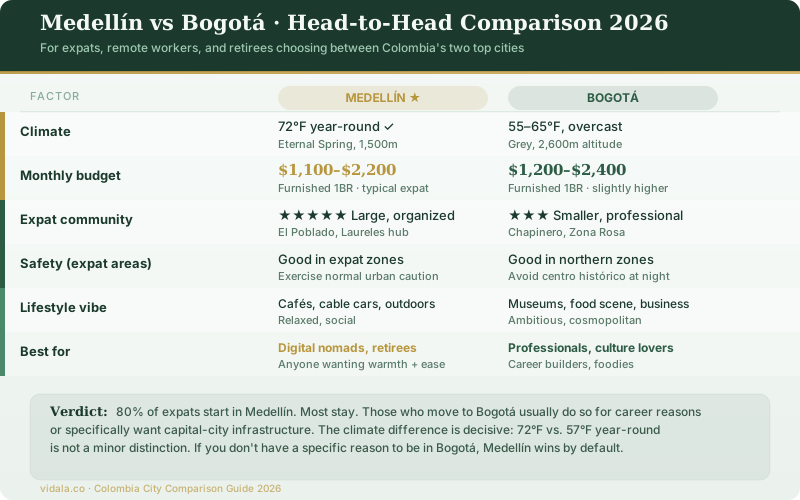
Cost of Living Comparison
The cost difference is real but not dramatic. Bogotá runs 10–20% more expensive than Medellín for a comparable lifestyle, enough to notice over a year but not enough to make one unaffordable while the other isn’t. Both are far cheaper than North America or Western Europe.
| Expense | Medellín | Bogotá |
|---|---|---|
| 1BR furnished, expat neighborhood (El Poblado / Zona Rosa) | $600–$1,200/mo | $800–$1,400/mo |
| 1BR furnished, mid-range (Laureles / Chapinero) | $400–$700/mo | $600–$1,000/mo |
| Monthly groceries, couple | $150–$270 | $180–$320 |
| Sit-down lunch, local restaurant | $3–$6 | $4–$7 |
| Mid-range dinner, per person | $10–$20 | $12–$22 |
| Fiber internet | $15–$30/mo | $15–$30/mo |
| Monthly transport, no car (Metro/Transmilenio + taxis) | $40–$80 | $60–$100 |
| Comfortable monthly total, single | $1,200–$1,800 | $1,400–$2,000 |
| Comfortable monthly total, couple | $1,700–$2,500 | $1,900–$2,800 |
The exchange rate as of March 2026 sits around 3,800 COP to the dollar, favorable for dollar earners. A $700/month Laureles apartment in Medellín costs you about COP 2.66 million.
For housing in Medellín, Booking.com has furnished El Poblado and Laureles apartments with monthly rate options, useful for your first 30–60 days while you sort a longer lease. If you’re testing Bogotá, the Chapinero and Usaquén areas have solid monthly furnished inventory there too.
For full breakdowns with neighborhood-level pricing: Medellín cost of living guide and Bogotá cost of living guide.
Climate: The Most Underrated Difference
This section gets minimized in most comparison guides. Don’t minimize it. Climate is one of the most personal factors in a relocation decision, and the Medellín vs. Bogotá difference is massive.
Medellín
Medellín sits at 1,500m (4,921 ft) in the Andes. Average temperature: 22°C (72°F), year-round. This is where the “City of Eternal Spring” tagline comes from, and it’s accurate. You’ll wear t-shirts and light layers. No heating, no AC. Rain comes mostly in the afternoon during the wet seasons (April–May and October–November), but temperatures don’t shift.
Altitude adjustment for Medellín: almost none for healthy adults. 1,500m is comparable to Denver, and most people feel fine within a day.
Bogotá
Bogotá sits at 2,600m (8,530 ft) — one of the highest major capital cities on earth. Average temperature: 13°C (55°F). At night it drops to 7–9°C (around 45°F). Most apartments in Bogotá don’t have central heating. You will own a good jacket here, or you’ll be cold.
The altitude adjustment is real. Most healthy people experience 1–2 weeks of headaches, fatigue, and shortness of breath when arriving from sea level. It passes. But people with heart conditions, respiratory issues, or anemia should talk to a doctor before committing to Bogotá long-term. The altitude is a medical consideration, not just a comfort one.
Some people love Bogotá’s climate. There’s a genuine category of expat who finds Medellín’s heat oppressive and loves wearing a sweater and drinking coffee in wool socks. If that’s you, Bogotá’s weather is a feature, not a bug.
Climate verdict: Medellín wins for most people. Bogotá wins specifically if you prefer cool weather and have no altitude concerns.
Safety Comparison
Both cities are safe in the right neighborhoods. Neither is the war zone their reputations once suggested. But “safety” means different things in different parts of both cities, and you need neighborhood-specific information, not a reassuring headline.
Medellín Safety
El Poblado, Laureles, and Envigado are all safe by Latin American standards — comparable to reasonably safe European neighborhoods. El Poblado in particular is heavily expat-frequented, well-lit, and has active street life that keeps things calm at most hours.
Downtown Medellín (El Centro) is fine during the day for purpose-driven walking: shopping, government offices. At night, it’s not where expats typically hang out, and petty crime (phone snatching, pickpocketing) ticks up.
Certain comunas in the northeast and northwest (above Aranjuez, parts of Castilla) are not places to wander without local knowledge. The Metro line is safe. The cable cars to the outer comunas are safe and worth doing; just stick to the tourist-accessible neighborhoods during those trips.
Petty theft rates in Medellín’s expat neighborhoods run lower than equivalent Bogotá zones.
Bogotá Safety
Bogotá is a larger, more spread-out city, and that creates more safety variance. The good neighborhoods are genuinely good. Chapinero, Zona Rosa, and Usaquén all have strong pedestrian infrastructure and are considered safe for expats operating standard urban awareness.
La Candelaria (the historic center) is fine by day for tourism; use more caution at night and keep your phone in your pocket. It has higher tourist theft rates than the expat zones.
Express kidnapping (where criminals force you to an ATM) is more reported in Bogotá than in Medellín’s expat neighborhoods. It’s still not common in the areas expats typically operate, but it happens more than in Medellín. Bogotá’s sheer size means your expat zone is farther from rough areas than in Medellín, which reduces accidental crossings.
Safety verdict: Medellín (marginally) for expat-zone comparison. Both cities are manageable with standard awareness, but Bogotá requires a bit more situational attention.
Expat Community and Social Life
Medellín
Medellín has the largest and most developed expat community in Colombia. El Poblado is the core of it: dense with foreign residents, international cafés, English-speaking landlords, and near-daily social events organized through Facebook groups and platforms like Meetup and Internations.
If you land in El Poblado with zero contacts, you can have friends within a week without effort. The nomad community is active, welcoming, and used to integrating newcomers. Language exchange events, salsa classes, weekend hiking trips to the Cocora Valley or Guatapé; there’s a social infrastructure here.
Laureles has a more settled expat presence, slightly older, fewer nomads, more people who’ve been there 1–3 years. Good choice if you want community without the party-neighborhood vibe of Poblado.
English is widely spoken in El Poblado’s restaurants, bars, and by most landlords listing to foreigners. You can function in English in the expat zone for an extended period. That’s useful when you first arrive; less ideal if you’re trying to actually learn Spanish.
Bogotá
Bogotá’s expat community is larger by total headcount but less concentrated. It’s a more professional crowd: multinational employees, NGO workers, diplomats, long-term residents. Less “digital nomad hub,” more international residents embedded in Colombian professional life.
The English coverage outside Zona Rosa and Usaquén is lower. You’ll need more Spanish faster. That’s actually an asset if integration is your goal; Bogotá expats generally report learning Spanish faster and making more Colombian friends than their counterparts in Medellín’s expat bubble.
Bogotá’s cultural infrastructure is unmatched in Colombia: the Gold Museum, the Botero Museum, MAMBO, Teatro Colón. Restaurants range from high-end Colombian cuisine to serious Japanese, Italian, and French kitchens. The food scene is consistently ranked among Latin America’s best. Andres Carne de Res (out in Chía, but worth the trip) is the kind of place Colombia is genuinely famous for.
Community verdict: Medellín for nomads and first-time expats. Bogotá for professionals wanting Colombian integration and cultural depth.
Coworking and Remote Work Infrastructure
Both cities are genuinely good for remote work, and not in a “close call” way — both have fast internet, reliable power, and strong coworking ecosystems. The difference is in character.
| Factor | Medellín | Bogotá |
|---|---|---|
| Coworking options | Excellent; nomad-community focus | Excellent; business-grade focus |
| Notable spaces | Selina El Poblado, WeWork Laureles, Atomhouse, Parque E | WeWork Zona Rosa, Regus, Selina, Nova |
| Day pass | $8–$15 | $10–$20 |
| Monthly desk | $80–$180 | $100–$200 |
| Fiber internet speeds | 100–500 Mbps common | 100–300 Mbps common |
| Mobile data (Claro, Tigo, Movistar) | Excellent | Excellent |
| Best for | Nomad community + networking events | Business meetings + enterprise infrastructure |
Power outages are rare in both cities. Backup internet via mobile hotspot is worth having regardless.
Remote work verdict: Tie on infrastructure. Medellín wins on community and cost; Bogotá wins on business-grade facilities.
Healthcare
Medellín
The private hospital system in Medellín is strong. Clínica Las Américas and Hospital Pablo Tobón Uribe are well-equipped and handle complex cases. Private GP visits run $25–$45; specialist visits $40–$75. English-speaking doctors exist in private clinics; ask when booking, as it’s not guaranteed at all facilities.
Dentistry in Medellín is excellent and costs 40–60% less than comparable US work.
Private health insurance: $50–$180/month depending on age and coverage level. SafetyWing is a practical starting option for expats who haven’t sorted longer-term coverage; it covers both Medellín and Bogotá and has no home-country restrictions for the global plan.
Bogotá
Bogotá has Colombia’s best healthcare concentration. Fundación Santa Fe de Bogotá, Clínica del Country, and Clínica Marly are all JCI-accredited (Joint Commission International), the same standard as top US hospitals. If you have complex, ongoing medical needs, Bogotá’s specialist depth exceeds Medellín’s.
Private GP visits: $30–$55. Specialist: $45–$85. English-speaking physicians are more available here than in Medellín.
One point worth repeating: the 2,600m altitude creates additional load on cardiac and pulmonary systems. People with heart conditions, chronic respiratory issues, or anemia should factor this into their Bogotá calculus. If your medical needs include management of those conditions, discuss altitude effects with your doctor before committing.
Healthcare verdict: Bogotá has more depth for complex conditions. Medellín is more than adequate for most expat healthcare needs. Both are dramatically more affordable than US private care.
Visas: Both Cities, Same Framework
Colombia’s visa system is national; your city choice doesn’t affect your options.
-
Digital Nomad Visa (Nómade Digital, M category): For remote workers earning from foreign employers. Income threshold: approximately $1,410/month from foreign sources (3× Colombia’s 2026 minimum wage, ~COP 5,252,715). As of mid-2025, the Ministry has applied a narrower interpretation requiring applicants to demonstrate they work in technology, content creation, or digital fields. Verify current requirements at time of application. → Full details: Colombia Digital Nomad Visa
-
Retirement Visa (Pensionado, M category): Pension or passive income of roughly $1,410/month (3× minimum wage). → Full details: Colombia Retirement Visa
-
Tourist entry: 90 days on arrival; extendable to 180 days/year. No work authorization.
Choose your city on lifestyle. The visa math is identical in both.
For moving logistics, costs, and the practical side of the actual move: Moving to Colombia: Complete Guide.
Who Actually Thrives Where
Who Thrives in Medellín
Digital nomads and remote workers. The community infrastructure in El Poblado is unmatched anywhere in Colombia: regular meetups, coworking events, skill-share groups. You will not feel isolated.
First-time expats. The English-speaking infrastructure and welcoming expat community make the adjustment easier. You can figure out Colombia from a supportive base before going deeper.
Retirees prioritizing climate and cost. 72°F year-round, $1,200–$1,500/month comfortable lifestyle, no altitude adjustment. It’s an easy sell.
Solo expats. The social infrastructure is designed for people arriving alone. You’ll have drinks with new people within days.
Altitude-sensitive individuals. 1,500m is comfortable for nearly everyone. No adjustment period for healthy adults.
Who Thrives in Bogotá
Business professionals and entrepreneurs. Most multinationals operating in Colombia are headquartered in Bogotá. The business networks, industry events, and corporate infrastructure are concentrated here. If your plan involves building something or doing in-person business, Bogotá gives you access that Medellín doesn’t.
Culture-focused expats. Bogotá’s cultural offering (world-class museums, live music, restaurant quality, architecture) is the best in Colombia and competitive regionally. If you’d be bored in Medellín after six months because you’ve done the waterfalls and salsa classes, Bogotá has more layers.
Couples where professional careers matter. If one person needs corporate-track work opportunities, Bogotá is the clear choice.
Expats who want to integrate beyond the expat bubble. Bogotá forces you to engage with Colombian society more directly. You’ll learn more Spanish faster and make more Colombian friends. It’s harder. But if that’s your goal, Bogotá accelerates it.
Cool-weather people. They exist. They love Bogotá.
Who Doesn’t Thrive
In Medellín: professionals who need in-person Colombian business networks. People who hate heat (it’s not oppressive, but it’s tropical-adjacent). Anyone who’ll feel socially stuck in an English-speaking expat bubble and wanted to actually immerse.
In Bogotá: people with altitude sensitivity or cardiac/respiratory conditions. Cold-weather haters. Expats on tight budgets where 15% matters. Nomads who prioritize community over solo hustle; Bogotá’s expat scene is thinner.
Frequently Asked Questions
Is Medellín really safer than Bogotá? In equivalent expat neighborhoods, yes, marginally. El Poblado vs. Zona Rosa gives a slight edge to Medellín for petty crime rates. Neither city is dangerous in its expat zones, but Bogotá’s size creates more neighborhood-by-neighborhood variation. The gap isn’t large enough to make safety your deciding factor unless you have specific neighborhood constraints.
Is Bogotá much more expensive than Medellín? About 10–20% for equivalent lifestyle. A couple living comfortably in Medellín for $2,200/month would spend around $2,500–$2,600 in Bogotá. Real and noticeable, but both are dramatically cheaper than the US or Western Europe.
Can I live in either city without Spanish? In El Poblado, Medellín: largely yes, at least for your first few months. In Bogotá’s Zona Rosa: partially. Outside those specific corridors in either city, basic Spanish becomes important quickly. For long-term integration, you’ll want it regardless.
Which city has better food? Bogotá, and it’s not close at the top end. It consistently ranks among Latin America’s best food cities; the restaurant diversity and quality are serious. Medellín has excellent local food at lower price points and some good restaurants in El Poblado. But Bogotá’s food scene is a genuine reason to choose it.
How different is the altitude adjustment? Medellín at 1,500m: no real adjustment for healthy adults. Bogotá at 2,600m: expect 1–2 weeks of headaches, fatigue, and shortness of breath. It passes, and you adapt. If you have heart or lung issues, talk to a doctor first.
Should I visit both before deciding? Yes. Two weeks in each city is enough to know. Both have plenty of furnished short-term options through Booking.com: Medellín in El Poblado or Laureles, Bogotá in Chapinero or Usaquén. The experience of actually being there will settle the question faster than any guide.
What’s the best way to transfer money to Colombia? Wise gives you the mid-market exchange rate and transparent fees, far better rates than bank wire transfers. Once you’re living in Colombia and need to move USD to COP regularly, it’s the standard tool most expats use.
The Verdict
Medellín wins for most expats: specifically digital nomads, first-time relocators, solo travelers, retirees who care about climate, and anyone with altitude concerns. The 72°F year-round weather, lower cost, and mature expat community make it the easier, lower-friction first choice for most people.
Bogotá wins for professionals, entrepreneurs, culture-seekers, and expats willing to pay a modest premium for capital-city access. If you’re doing in-person business in Colombia, building a network, or want to live closer to Colombian culture than to an expat bubble, Bogotá is the better fit. The food alone is a legitimate reason to choose it.
The honest tiebreaker: visit both. Book a month in your top choice. Both cities have enough short-term furnished inventory that this is easy to arrange. A month of living somewhere tells you more than any amount of research.
→ Moving to Colombia: Complete Guide → Colombia Digital Nomad Visa → Colombia Retirement Visa