
Colombia moved from “risky adventure” to “legitimate life choice” faster than most people realize. The country that appeared in every “danger” headline through the 1990s and 2000s now hosts tens of thousands of expats in Medellín alone; drawn by a combination of low costs, fast internet, good weather, and a city infrastructure that rivals much of Western Europe at a fraction of the price. The Medellín of 2026 has a homicide rate of 14 per 100,000 people. For context, that’s lower than Baltimore, New Orleans, and Memphis.
But Colombia isn’t for everyone, and the “move to Medellín” narrative has outrun some inconvenient realities: bureaucracy is real, Spanish is essential outside expat neighborhoods, and Bogotá at 2,600 meters above sea level genuinely knocks some people flat for weeks. This guide gives you the honest version; visas, cities, costs, safety, banking, and what the first three months actually look like.
This is for people who want real information, not a relocation sales pitch.
Why People Are Moving to Colombia (And Why Some Shouldn’t)
The Case For
The time zone. Colombia runs on EST year-round, which means US-based remote workers can hold morning calls with New York clients from a café in El Poblado without anyone being inconvenienced. If you’ve tried running US business hours from Southeast Asia or Europe, this alone is significant.
The cost differential. A furnished one-bedroom in Laureles runs $600–$900/month. A meal at a solid local restaurant (soup, main, fresh juice) costs $3–$5. Private health insurance starts at $47/month through plans like SafetyWing. At the current exchange rate of around 3,750–3,800 COP to the dollar, a USD income goes considerably further than it did in 2022.
The expat infrastructure. Medellín in particular has built out enough coworking spaces, English-speaking services, and expat communities that arriving with zero Spanish and zero local connections is workable for your first few months. You won’t stay comfortable that way long-term, but the on-ramp is gentle compared to smaller cities.
Climate diversity. Colombia contains every climate zone within a few hours of each other. Medellín sits at 1,495 meters; 72°F (22°C) year-round, mild and consistent. Cartagena is coastal and hot (88°F+). Bogotá is cool and often overcast. The Eje Cafetero (Coffee Region) looks like something from a nature documentary.
Honest Downsides
Language. Spanish is not optional for anything beyond tourist-mode living. Outside El Poblado and the Centro Internacional in Bogotá, English is sparse. Government agencies, landlords, banks, and doctors typically operate in Spanish only. If you’re not willing to study, you’ll be functionally dependent on others for basic administrative tasks.
Altitude. Bogotá at 2,600 meters above sea level is not trivial. The first two to four weeks can include fatigue, shortness of breath, and persistent headaches. Most people adjust, but if you have cardiovascular conditions, talk to a doctor before committing. Medellín at 1,495 meters is easier on most people.
Bureaucracy. Colombia’s immigration and administrative systems are genuinely slow. Bank account opening takes weeks. Visa processing takes 30 days. Long-term lease terms often require a local guarantor (codeudor) that foreigners can’t easily provide. Budget time and patience for these systems.
Neighborhood awareness is not optional. The broad safety improvement is real, but it’s uneven. The same city that has safe, walkable neighborhoods has adjacent areas where tourists and expats should not walk at night. Medellín’s situation maps are not published in tourist guides. You’ll learn them from locals.
Who Colombia Is Best For
The people who thrive in Colombia tend to fit a few profiles:
- Remote workers and digital nomads on USD or EUR income who can absorb the income threshold for the digital nomad visa (~$1,400/month from foreign sources)
- Early retirees with pension or passive income above that same threshold
- Adventurous long-term travelers willing to invest in learning Spanish and navigating local systems
- Latin America re-locators who’ve already spent time in Mexico or Ecuador and want more urban intensity
Colombia is a poor fit for: people who want European infrastructure or comfort levels, anyone with no Spanish and no interest in learning, retirees who want a genuinely quiet, slow-paced life (Medellín is a real city, with real city noise), and anyone expecting the process to be simple.
Visa Options: How to Live in Colombia Legally
Tourist Entry (No Visa Required)
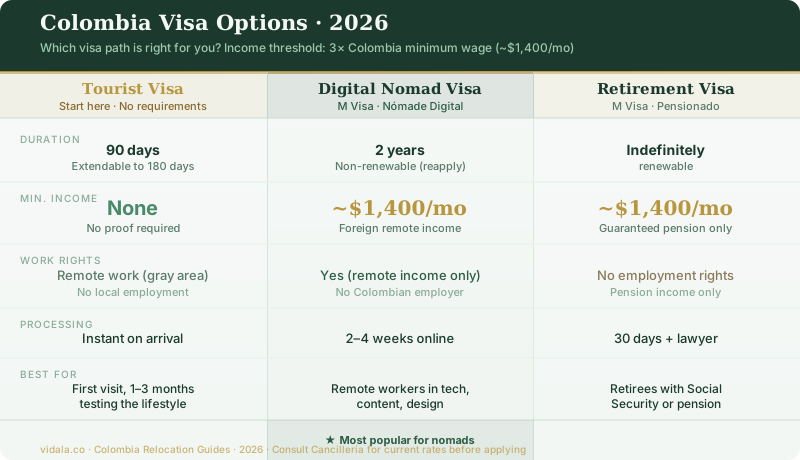
Citizens of the US, UK, Canada, and most of Europe don’t need a visa to enter Colombia. You get 90 days on entry, which can be extended to 180 days per calendar year by paying a modest fee at a Migración Colombia office before your first 90 days expires.
You cannot legally work or earn income from Colombian sources on tourist entry. For foreign-source remote work, the rules are technically ambiguous; Colombia’s 2026 “digital nomad” interpretation is increasingly strict, but tourist entry is still the standard approach for people doing a 1–3 month scouting trip. Do the scouting trip. Don’t commit to a visa, a city, or a 12-month lease before you’ve spent time on the ground.
Digital Nomad Visa (Visa M: Nómade Digital)
This is the visa for remote workers earning income from abroad. The income requirement is 3× Colombia’s minimum wage, which at the 2026 minimum wage of 1,750,905 COP/month works out to approximately 5,252,715 COP (~$1,400 USD/month) in verifiable foreign income.
The catch: starting in mid-2025, Colombia’s Ministry of Foreign Affairs began applying a narrower interpretation. Applications are increasingly approved only for people in clearly digital fields; software development, content creation, online education, design. If your remote income comes from consulting, financial services, or less clearly “digital” work, rejection risk has increased substantially. The visa is still being issued, but check current requirements before applying.
Duration: 2 years, non-renewable. After expiry, you’d need to depart and apply for a different visa category.
You also need proof of health insurance. SafetyWing’s Nomad Insurance covers Colombia from $47/month and satisfies the documentation requirement.
→ See our full Colombia Digital Nomad Visa guide for the complete document checklist and application walkthrough. Official applications are filed at visascolombia.cancilleria.gov.co.
Retirement/Pensionado Visa (Visa M: Pensionado)
For retirees receiving a guaranteed monthly pension; Social Security, military pension, company retirement plan: the income threshold is the same 3× minimum wage: approximately $1,382–$1,400/month from a qualifying pension source as of 2026.
Note the distinction from the digital nomad visa: this requires pension income specifically, not investment returns or freelance income. Dividends, rental income, and savings drawdowns don’t qualify for this category.
Once approved, the pensionado visa is indefinitely renewable. After 5 years on this visa, you can apply for permanent resident status (cedula de extranjería), and after an additional 5 years of permanent residency, Colombian citizenship becomes available.
→ See our Colombia Retirement Visa guide for the full document checklist, processing timeline, and lawyer costs.
Other Visa Categories
Investor visa: Requires an investment of approximately 650 SMLMV (around $304,000 USD at 2026 rates) in Colombian business or real estate. Worth mentioning but not the primary path for most.
Student visa: Open to anyone enrolled in a recognized Colombian educational institution. Spanish-language school enrollment is a legitimate path some use to extend legal stay while building local connections.
Path to Permanent Residency
Qualifying for permanent residency requires 5 years of continuous presence on a qualifying visa; nomad, retirement, or investor. “Continuous” means you don’t leave for extended periods; specific rules vary. After permanent residency, you get a cedula de extranjería, full work rights, and the right to remain indefinitely.
Colombian citizenship by naturalization is available after 5 years of permanent residency (and longer for some nationalities).
Best Cities in Colombia for Expats
Colombia is a big country with radically different cities. The “move to Medellín” default makes sense for a lot of people, but it’s not the only answer.
Quick Decision Matrix
| If you are… | Go to… | Why |
|---|---|---|
| Digital nomad, first time in LATAM | Medellín (El Poblado or Laureles) | Deepest expat infrastructure, easiest arrival |
| Retiree wanting quiet and lower cost | Medellín (Envigado or Sabaneta) | Lower prices, residential feel, still full services |
| Professional, culture/nightlife priority | Bogotá (Chapinero, Usaquén, Zona Rosa) | Capital-city access, professional networks |
| Beach life, shorter stay | Cartagena or Santa Marta | Caribbean access, though pricier in tourist zones |
| Salsa, warmth, local culture | Cali | Cheaper than Medellín, genuinely Colombian |
| Budget-first, slower pace | Manizales or Pereira | Off the expat radar, strong local infrastructure |
Medellín: The Default for a Reason
Medellín has everything that makes Colombia work for expats: fiber internet in most apartments (100 Mbps plans start at $15–$20/month), a functional Metro plus cable car system, three major hospitals with English-speaking staff, a coworking scene dense enough to have real specialization, and the Eternal Spring climate at 72°F year-round.
The city is split into comunas (districts). For expats, the relevant zones are:
El Poblado: The original expat hub. Parque El Poblado is the social center; Provenza street has Pergamino Café, some of the best specialty coffee in Colombia, and restaurants that would cost three times as much in New York. Furnished 1BR: $800–$1,400/month. Best for first-timers, but after a month many people move somewhere less tourist-saturated.
Laureles: Flat, walkable, genuinely Colombian neighborhood that has absorbed enough expats to have English-friendly services without becoming a tourism district. Most experienced Medellín residents will tell you Laureles is the long-term sweet spot. Furnished 1BR: $600–$900/month.
Envigado: The suburb south of Poblado. Quieter, cheaper (furnished 1BR: $500–$700/month), family-oriented. Popular with people who’ve decided to stay long-term and want to live less like tourists.
→ Full Medellín cost breakdown
Bogotá: Capital Intensity
Colombia’s capital is colder (55–65°F most of the year at 2,600m), larger (8 million people), and more professional in character. If you’re here for business, arts, or cultural access, Bogotá has what Medellín doesn’t; embassies, headquarters, major universities, and a restaurant and nightlife scene that’s objectively more sophisticated.
The altitude adjustment is real. Budget 2–4 weeks for full acclimatization. Heart rate spikes on stairs for a month.
Key neighborhoods: Chapinero (younger, arts, LGBTQ+ friendly), Usaquén (upscale colonial, weekend market), Zona Rosa (business and dining district). Furnished 1BR in expat zones: $600–$1,100/month.
→ Full Bogotá cost breakdown and neighborhood guide | Bogotá expat guide
Cartagena: Caribbean, With Caveats
The walled colonial city is one of Colombia’s most beautiful places. The architecture alone is worth a visit. But as a long-term base for expats, it has limitations: the tropical heat (88–95°F year-round) is intense, tourist areas are significantly more expensive than the interior, and the local expat community is smaller and more transient. Better as a destination than a home base, unless you specifically want Caribbean coast life.
Cali: Salsa and Low Costs
Colombia’s third-largest city gets overlooked in the Medellín spotlight, but it deserves attention. Cali is warmer, cheaper (furnished 1BR in expat-adjacent neighborhoods: $400–$700/month), and more locally Colombian in character; fewer English-speaking services, smaller expat community, but also fewer of the problems that come with being a tourist magnet. The salsa culture here is the real thing. Safety in Cali requires more neighborhood awareness than Medellín; it’s improving but slower.
Smaller Options: Manizales, Pereira, Santa Marta
Manizales and Pereira (both in the Eje Cafetero coffee region) offer smaller-city infrastructure with lower costs and genuinely good quality of life. Monthly budgets of $800–$1,200 are achievable. The expat community is thin, which is either a draw or a deterrent depending on your personality.
Santa Marta on the Caribbean coast combines beach access with proximity to Parque Nacional Tayrona. More affordable than Cartagena, growing slowly as an expat destination.
→ Full city-by-city guide: Best Places to Live in Colombia
Cost of Living in Colombia
The numbers below reflect what a single person actually spends in 2026, not minimum-possible-existence estimates. Exchange rate used: 3,750 COP = 1 USD.
| Expense | Medellín (Budget) | Medellín (Comfortable) | Bogotá |
|---|---|---|---|
| 1BR furnished apartment | $500–$700 | $800–$1,400 | $600–$1,100 |
| Groceries (month) | $150–$250 | $250–$400 | $200–$350 |
| Eating out (local restaurant) | $3–$6/meal | — | $4–$8/meal |
| Internet (fiber, 100 Mbps) | $15–$25/mo | — | $15–$30/mo |
| Private health insurance | $47–$100/mo | $100–$200/mo | varies |
| Transport (Metro/bus) | $20–$40/mo | — | $30–$60/mo |
| Single person monthly total | $900–$1,400 | $1,600–$2,200 | $1,200–$2,000 |
The $1,600–$2,200 “comfortable” budget in Medellín gets you a Laureles apartment, a mix of eating out and cooking, a gym membership, occasional Ubers, and a bit of weekend travel within Colombia. It’s a genuinely comfortable life by most standards.
For context: you can live on less. A budget of $900–$1,200 works if you cook most meals and rent in Envigado or Sabaneta. But trying to replicate a $900/month budget with a tourist-zone lifestyle is going to make you miserable.
→ Full Medellín cost breakdown with neighborhood-by-neighborhood rent data | Colombia cost of living: 10 cities compared
Safety in Colombia: The Real Picture
The broad story is real: Colombia is dramatically safer than it was 15 years ago. Both Medellín and Bogotá recorded homicide rates of approximately 14 per 100,000 in 2023, and the trend has continued downward into 2025–2026. Medellín’s current rate is the lowest it has been in over 40 years. For reference, the US national average in recent years has been around 6–7 per 100,000, but New Orleans and Baltimore both exceed 40. Medellín is safer than those cities.
The risk that remains is mostly:
Petty crime: Phone snatching is common in busy pedestrian areas across all cities. Keep your phone in a pocket or bag rather than holding it visibly on the street. This is the adjustment most expats have to make and then don’t think about again.
Express kidnapping via unofficial taxis: Someone hails a cab, three people are already inside, the person is driven to ATMs and forced to withdraw cash. This was more common a few years ago but still happens. The solution is simple: use Uber, InDriver, or Cabify exclusively. Never get into a taxi without calling it through an app. Every expat will tell you this.
Neighborhood-specific risk: The map is not uniform. In Medellín, El Poblado, Laureles, Envigado, El Centro (during daytime), and the cable car neighborhoods are reasonably safe. Certain comunas to the north and west require local knowledge before visiting. In Bogotá, avoid La Candelaria and Kennedy after dark. In both cities, the “safe” neighborhoods for expats are genuinely safe; just don’t wander out of them without asking a local first.
Rural areas and certain departments: Cauca, Chocó, and Arauca have active armed conflict and are a different situation entirely. Stick to cities and major tourist routes.
For insurance that covers emergency evacuation, hospitalization, and medical costs across Colombia: SafetyWing Nomad Insurance covers Colombia for around $47/month and is what most expats use before settling into a longer-term plan.
Healthcare in Colombia for Expats
Colombia has world-class private hospitals at costs that feel absurd to Americans. A specialist consultation runs $30–$80 USD. A private hospital emergency visit runs $100–$300. Surgeries that cost $40,000 in the US regularly come in at $3,000–$8,000 at Medellín’s Clínica Las Américas or Bogotá’s Fundación Santa Fe.
The system has two tracks:
EPS (public system): Available to legal residents who register and contribute. Requires a cedula de extranjería, so tourist-entry expats can’t access it. Processing takes months. Most short-to-medium-term expats skip this.
Prepagada (private insurance): Colombian private insurers like Sura and Colsanitas offer full-coverage plans starting at around $80–$150/month for someone under 45. These are the best long-term option once you have legal residency and a cedula. Coverage is comprehensive and the networks include all the top private hospitals.
For new arrivals and tourists: International health insurance is the practical path. SafetyWing Nomad Insurance starts at $47/month and covers hospitalization, emergency evacuation, and travel-related incidents. It also satisfies the health insurance documentation requirement for the digital nomad and retirement visas. Once you’re settled and have a cedula, transitioning to Sura or Colsanitas typically saves money and improves coverage.
Pharmacies (droguerías) are everywhere in Colombian cities and many medications available by prescription only in the US are over-the-counter here. This is useful for minor ongoing medical needs.
Banking and Money in Colombia
This section is missing from almost every competing guide about moving to Colombia. It’s also one of the biggest frustrations new arrivals face. Here’s how it actually works.
The Problem
Colombian banks require a cédula de extranjería (foreign ID card, issued only to visa holders) to open a standard account. Tourists cannot open a bank account at Bancolombia or Banco de Bogotá; period. Even visa holders face a bureaucratic process that takes weeks of in-person visits and document submission.
What Actually Works for New Arrivals
Wise: The best tool before you have a Colombian account. You can hold Colombian pesos (COP) in a Wise account, send transfers from a US bank account at mid-market exchange rates (approximately 0.7% fee), and pay with a Wise debit card at ATMs and card terminals across Colombia. Withdrawals from Bancolombia ATMs (the most reliable network) are fee-free up to Wise’s monthly limit. Set this up before you leave. Wise is consistently the lowest-cost option for transferring money to Colombia.
Nequi: Colombia’s digital bank (owned by Bancolombia) now allows foreign residents to open accounts. This is a recent change. You need a valid Colombian visa and a Nequi-issued NIT (taxpayer number). The account comes with a Visa debit card and requires no monthly fees or minimum balance. Daviplata (Davivienda’s digital offering) has similar functionality. These are the easiest formal accounts to access as a new resident.
ATM access: Bancolombia ATMs are the most reliable and widely available. Davivienda and BBVA are also broadly deployed. Non-Colombian bank cards work at most ATMs but typically incur a $3–$5 withdrawal fee from the Colombian bank, on top of whatever your home bank charges. Withdrawing larger amounts less frequently reduces this friction.
Bancolombia (traditional account): The full-service banking relationship that makes local life easier; direct COP deposits, wire transfers, local bill payments. Requires in-person branch visit, cedula de extranjería, proof of address, and proof of income. Expect the process to take 2–3 visits over several weeks. Worth doing once you have legal residency.
Tip for pension recipients: Panama uses USD, so this friction is less relevant there. Colombia is peso-denominated; transfer your pension or income via Wise to minimize conversion costs until you have a local account.
Finding Housing in Colombia
First 30 Days
Arrive with a short-term furnished apartment rather than committing to anything long-term. Booking.com lists furnished apartment options in El Poblado and Laureles with monthly rates; search specifically for “apartamento amoblado” with monthly price filters. Budget $800–$1,200/month for a comfortable furnished 1BR in El Poblado, $600–$900 in Laureles. This buys you time to explore neighborhoods before signing a 12-month lease.
Airbnb works but is more expensive than direct apartment rentals. MercadoLibre and Finca Raíz are Colombian real estate platforms where local landlords post furnished rentals directly.
Medium-Term (3–6 Months)
Facebook groups are more useful than they should be for Colombia housing. “Expats in Medellín,” “Medellín Housing and Rentals,” and city-specific groups have active daily listings. Ciencuadras.com is a local Colombian platform with better listing depth than international sites.
Long-Term Leases
12-month unfurnished leases are how Colombians rent. They’re the cheapest option (an unfurnished 2BR in Laureles might run $400–$600/month) but come with complications: peso-denominated rent that adjusts with inflation annually, a codeudor (local Colombian guarantor) requirement that foreigners typically can’t satisfy, and an empty apartment to furnish.
Some landlords will waive the codeudor requirement if you pay 3–6 months upfront. This is a negotiation. Many expats find their long-term apartments through personal connections made in local Facebook groups rather than formal listings.
Neighborhoods at a Glance
| Neighborhood | City | Character | Price Range (1BR furnished) |
|---|---|---|---|
| El Poblado | Medellín | Expat hub, nightlife, walkable | $800–$1,400/mo |
| Laureles | Medellín | Local + expat, flat, quieter | $600–$900/mo |
| Envigado | Medellín | Residential, families, cheaper | $500–$750/mo |
| Chapinero | Bogotá | Young, arts, diverse | $600–$1,000/mo |
| Usaquén | Bogotá | Upscale, colonial, weekend market | $700–$1,200/mo |
| Getsemaní | Cartagena | Colonial, artsy, gentrifying | $600–$1,000/mo |
| Barrio Granada | Cali | Central, salsa culture | $400–$700/mo |
Moving Logistics
International Moving
For a full container move from the US, sea freight to Colombia’s main ports (Cartagena and Buenaventura) costs approximately:
- 20ft container: $1,530–$1,870 (February 2026 rates)
- 40ft container: $1,620–$1,980
US East Coast to Cartagena takes 15–25 days; US West Coast to Buenaventura takes 10–20 days. Add customs clearance, local transport, and insurance and you’re looking at $4,000–$7,000 total door-to-door depending on origin and volume.
Standard advice: don’t ship furniture. Colombian furniture is cheap, mid-range quality is readily available in Medellín and Bogotá, and shipping costs often exceed local replacement value. Ship electronics, personal items, specialty equipment, and sentimental items. Buy a bed, a desk, and a sofa when you arrive.
Pets
Colombia’s relevant authority for pet imports is ICA (Instituto Colombiano Agropecuario): not SENASA, which is Argentina’s agricultural agency. For dogs and cats, you need:
- Valid health certificate issued by a licensed vet within 10 days of travel
- Proof of current vaccinations including rabies
- ICA import permit (applied for in advance)
Dogs and cats don’t need a quarantine period if documentation is in order. Most major airlines handle Colombia pet imports with advance notice. PetRelocation.com is a reliable coordinator if you want professional help navigating the paperwork.
Registering with Your Embassy
US citizens moving abroad should register with the State Department’s STEP program (Smart Traveler Enrollment Program) at step.state.gov. It’s free, takes 10 minutes, and means the US Embassy in Bogotá can reach you in an emergency. Easy to skip, worth doing.
Frequently Asked Questions
Can I buy property in Colombia as a foreigner? Yes, with no restrictions on foreign ownership. You can purchase property as a tourist, a visa holder, or a permanent resident; same process, same rights as Colombian citizens. The Notaría system handles all real estate transactions. Budget 2–3% of purchase price for transfer taxes and notary fees.
Do I need to speak Spanish? You can survive the first few months in Medellín’s El Poblado or Bogotá’s Zona Rosa without it. You cannot build a real life in Colombia without it. Government offices, medical appointments, lease negotiations, and neighborhood interactions all run on Spanish. If you’re serious about Colombia, start lessons before you arrive. Duolingo is not enough. iTalki or a local language school gets you functional faster.
Can I drive with my foreign license? Yes for tourists, up to 90 days from entry. After that, you’re technically required to have a Colombian license. Enforcement is inconsistent but the requirement is real. The Colombian license process involves a written and practical test. An international driver’s permit from AAA (obtained in the US) provides additional documentation during your initial stay.
How safe is it to drive? Driving in Colombian cities is aggressive by North American standards. Traffic laws are advisory at best. Medellín is more manageable; Bogotá traffic is genuinely intense. Most expats in cities use Uber or InDriver for everything and don’t rent or buy a car until they’re established. Outside cities, renting a car to explore the Eje Cafetero or the coast is easy enough with an alert approach.
How long until I feel settled? Most expats say 3–6 months before Colombia starts feeling like home rather than a long trip. The first month is exciting, the second month is logistically exhausting (visa paperwork, apartment hunting, banking setup), and by month three the routine settles in. Spanish progress is the biggest variable; people who invest in it early feel settled faster.
Is Colombia expensive compared to the US? For housing and food: roughly 50–60% cheaper for a comparable quality of life. For electronics, imported goods, and anything with significant US brand cachet: often the same price or more expensive. Buy your laptop and phone before you leave.
What to Do Next
Colombia rewards planning. The expats who arrive having already done their research; who know their target neighborhood, their visa path, and have Wise set up before landing; settle in faster and cheaper than those who figure it out on arrival.
A practical sequence:
- Do the scouting trip first. 1–3 months on tourist entry. Visit your two or three candidate cities. Stay in different neighborhoods. Work from different coworking spaces. Figure out where you’d actually be comfortable.
- Pick your visa path. If you’re a remote worker earning $1,400+/month from abroad in a digital field, the nomad visa makes sense. If you’re retiring on a guaranteed pension of $1,400+/month, the retirement visa is straightforward. If you’re not yet at those thresholds, tourist entry plus a 90-day extension buys you 6 months to figure it out.
- Get health insurance in place. Do this before you arrive. SafetyWing is the easiest starting point and satisfies the visa documentation requirement.
- Set up Wise. Use Wise for money transfers from the moment you land. It’s the lowest-cost way to move money until you have a Colombian account.
- Apply for your visa. After the scouting trip, once you know you’re committing. Consult an immigration lawyer for the retirement visa; fees of $800–$1,500 are worth it for the documentation complexity.
- Book short-term housing. Use Booking.com for your first 30 days in El Poblado or Laureles. Don’t sign anything long-term until you’ve lived in a neighborhood.
Colombia in 2026 is a serious destination; not a budget workaround or an expat fantasy, but a country with enough infrastructure, culture, and value proposition to justify a real life. The research pays off. The scouting trip pays off. And the Spanish lessons you start today will be the best investment you make before the move.
→ Ready for the visa details? Colombia Digital Nomad Visa; Complete Guide | Colombia Retirement Visa; Requirements and Timeline. To connect with the expat community: best expat social media groups for Colombia, Ecuador & Panama