
Colombia has more good expat cities per capita than almost anywhere else in Latin America. That’s the problem. Move too fast and you’ll end up in the wrong one; paying Cartagena’s tourist-inflated rents while dreaming of Medellín’s weather, or landing in El Poblado expecting a local experience and finding a neighborhood that feels like South Beach with arepas.
The real question isn’t whether Colombia is a good place to live. It obviously is. The question is which of these very different cities fits your actual life: your budget, your tolerance for heat or altitude, your need for English-speaking infrastructure, and what you want to do with your days. This guide covers six cities honestly: Medellín, Bogotá, Cartagena, Cali, Santa Marta, and Manizales. Real costs, real safety context, specific neighborhood names, and a direct comparison matrix so you can stop reading five tabs simultaneously and make a decision.
For full context on visas, banking, healthcare, and the logistics of moving to Colombia, see our Moving to Colombia: Complete Guide.
Quick Decision Matrix: Which Colombian City Is Right For You?
This is the fastest path to your answer. Pick your profile, find your city.
| If you are… | Best city |
|---|---|
| Digital nomad / remote worker | Medellín (El Poblado or Laureles) |
| Retiree on a budget wanting spring weather | Medellín or Manizales |
| Retiree wanting Caribbean lifestyle | Cartagena (Bocagrande or El Laguito) |
| Business professional | Bogotá |
| Culture and nightlife seeker | Bogotá or Cali |
| Salsa dancer / party lover | Cali |
| Beach-based digital nomad | Santa Marta |
| Ultra-low budget, comfortable with Spanish | Manizales or Pereira |
| Couple: one working remotely, one not | Medellín or Bogotá |
Don’t fit cleanly into one row? Keep reading. The city sections below have the nuance.
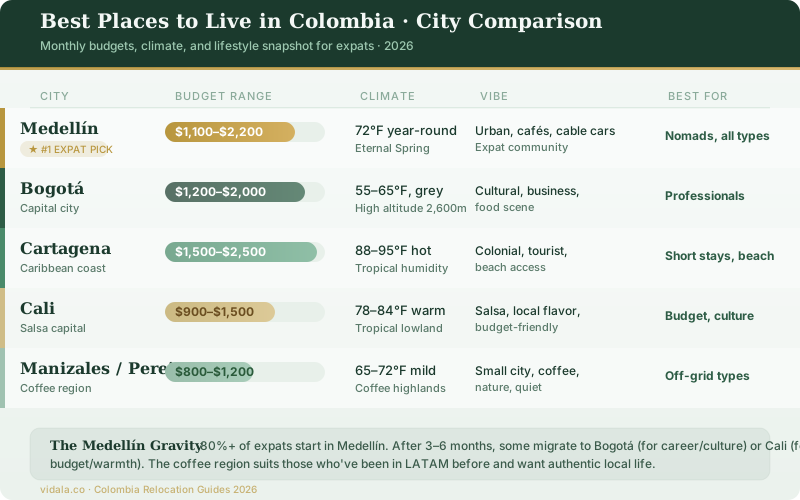
Medellín: The Expat Capital of Colombia
Medellín wins for most first-time expats, and the reasons are straightforward: 72°F year-round, the deepest coworking infrastructure in the country, a large English-speaking expat community, and a cost-to-quality ratio that’s hard to beat in Latin America. It’s not perfect: the city has become more expensive as its reputation grew, and parts of El Poblado no longer feel particularly Colombian, but for most people arriving without a strong preference for another city, Medellín is the right starting point.
Neighborhoods
El Poblado is the main expat hub. Every restaurant has an English menu, the streets are walkable, and you’ll find grocery stores with imported products, yoga studios, and specialty coffee shops within a few blocks in any direction. For first-time arrivals, it’s easy; possibly too easy. El Poblado insulates you from the Colombia outside it, which is either a feature or a bug depending on what you want. Rent for a furnished 1-bedroom runs $600–$1,200/month; nicer apartments with views go higher.
Laureles is where expats move after a few months in El Poblado when they want a better deal and more of a local feel. Flat streets (unlike El Poblado’s hills), tree-lined avenues, good restaurants that Colombians actually eat at, and solid expat infrastructure without the party-hostel density. A furnished 1BR in Laureles costs $400–$700/month. This is where I’d start if I were doing it again.
Envigado is technically a separate municipality from Medellín; which matters for some visa purposes but not for daily life. It’s adjacent to El Poblado, quieter, family-oriented, and offers some of the best value in the metro area. Good private schools, a calm plaza, and newer apartment buildings. It’s slower-paced than El Poblado; don’t come here for nightlife.
Sabaneta, further south, is growing fast. Newer construction, quieter streets, car-preferred. A good option for families and retirees who want space and don’t mind not being in the center of things.
El Centro (downtown Medellín) is cheap and authentic. It’s also not recommended for newcomers without strong Spanish and real street awareness. Include it in your exploration: the cable car up to Comuna 13 is worth doing, but don’t start your Colombia life here.
Cost of Living
| Item | Monthly cost |
|---|---|
| 1BR furnished apartment (El Poblado) | $600–$1,200 |
| 1BR furnished apartment (Laureles) | $400–$700 |
| Coworking day pass | $8–$15 |
| Coworking monthly desk | $120–$250 |
| Local lunch (almuerzo) | $3–$5 |
| Restaurant dinner for two | $25–$60 |
| Uber across the city | $3–$7 |
| Gym membership | $25–$45 |
Comfortable monthly total for one person: $1,200–$1,800. That covers a decent Laureles apartment, eating out regularly, and coworking a few days a week. El Poblado lifestyle pushes it to $1,800–$2,500.
For a full breakdown, see our Medellín cost of living guide.
Finding housing: For your first 30 days while you scout neighborhoods, Booking.com has furnished monthly-rate apartments in El Poblado and Laureles; search for “monthly stays” to filter for longer-term options. Once you’re on the ground, local Facebook groups and the Finca Raíz app are better for longer leases.
Safety Context
Medellín’s transformation since the 1990s is real and documented, not just expat hype. The homicide rate has dropped from over 380 per 100,000 residents in 1991 to under 20 today; roughly comparable to major US cities like Baltimore or New Orleans. El Poblado, Laureles, and Envigado are very safe by Latin American standards. You can walk around at night, take taxis or Uber, and use your phone on the street without the constant threat awareness that some other Colombian cities require.
The neighborhoods to avoid are concentrated in the northern and western comunas and around the central market area at night. Ask locally; Colombians are direct about which areas are fine and which aren’t.
Best For
- Digital nomads: best coworking infrastructure in Colombia, reliable fiber internet, large nomad community with events and meetups
- Retirees wanting urban amenities, low cost, and spring weather
- Solo expats wanting an active social scene with other expats and young Colombians
Worst For
- Anyone wanting beach access (you’re landlocked; the coast is 3 hours away by car)
- Expats wanting an immersive, non-English local experience
- People who find gentrified neighborhoods uninspiring; El Poblado especially can feel homogenized
Bogotá: Capital, Culture, Commerce
Bogotá is Colombia at full scale: 11 million people, the country’s best restaurants and museums, most international business connections, and a cultural density that none of the other cities touch. It costs more than Medellín, the weather is cold and grey for chunks of the year, and there’s an altitude adjustment period that can genuinely knock you down for a week. But if you’re in Colombia for professional reasons, or you want the cultural richness of a real capital city, Bogotá delivers.
Neighborhoods
Chapinero and La Zona Rosa attract young professionals and creative types. LGBTQ+-friendly, walkable, full of coffee shops and restaurants, close to the Parque 93 area. A furnished 1BR runs $600–$1,100/month. This is probably the best neighborhood for digital nomads who want Bogotá specifically.
Usaquén in the north is upscale and quiet. Sunday market on the plaza, good restaurants, and a slower pace than Chapinero. A furnished 1BR goes for $700–$1,200/month. The crowd skews older and more settled.
Rosales and El Chicó are premium residential areas where Colombia’s upper-middle class lives. Quiet, green, and expensive. Rent reflects it.
La Candelaria (the historic center) has the museums, the street art, the colonial architecture, and real safety challenges at night. Fine to visit; not where you want to live as a newcomer.
Cost of Living
Monthly budget (comfortable, one person): $1,400–$2,100. Bogotá runs about 15–20% more expensive than Medellín overall. Housing is the main driver. Dining costs are similar; transport is a bit cheaper since the TransMilenio bus system is extensive (though crowded and not recommended with luggage or at rush hour).
The Altitude Issue (Read This Before Committing to Bogotá)
Bogotá sits at 2,600 meters (8,530 feet). Most healthy adults adjust within 3–7 days: headaches, shortness of breath on stairs, fatigue. That’s normal and temporary.
The more important consideration: people with heart disease, chronic lung conditions like COPD, or severe asthma should consult a physician before committing to Bogotá long-term. The research on high-altitude cardiovascular effects is real. This isn’t fearmongering; it’s information that most travel blogs skip because it’s not flattering. Medellín is at 1,500 meters and has no meaningful altitude adjustment. If you’re a retiree with cardiac history, Bogotá is a riskier pick.
Safety Context
Bogotá is safer than its historical reputation, and specific neighborhoods are genuinely secure. But it requires more active awareness than Medellín. Petty theft rates in tourist areas and on public transit are higher. Keep your phone in your pocket on the street; don’t pull it out to check maps in areas you don’t know. Chapinero and Usaquén are fine. La Candelaria is daytime-only for newcomers.
The altitude, the cost, and the safety awareness are the honest trade-offs. In exchange, you get the most culturally rich city in Colombia. → Bogotá expat guide
Best For
- Business professionals and entrepreneurs with Colombian clients or partners
- Culture seekers: world-class museums, art scene, restaurant diversity
- Those who want to be inside Colombian professional life rather than the expat bubble
Worst For
- Retirees wanting low cost and mild weather (Medellín is a better deal on both)
- Digital nomads without business ties to Bogotá (Medellín’s nomad community is stronger)
- Anyone with altitude sensitivity or relevant health conditions
Cartagena: Caribbean Coast and Colonial Beauty
Cartagena is Colombia’s most visually striking city: a UNESCO World Heritage walled city on the Caribbean coast, pastel colonial facades, and warm water fifteen minutes from the center. It’s also the most expensive, the hottest, and the most tourist-dependent of the six cities on this list. That’s not a reason to avoid it; it’s information you need to calibrate expectations.
Neighborhoods
El Centro and Getsemaní are the historic walled city and the neighborhood directly outside it. Boutique apartments in colonial buildings, heavy tourism foot traffic, lively at night. A furnished 1BR costs $800–$1,600/month; premium pricing for the location.
Bocagrande is where most long-term expats end up: a modern beach neighborhood on a peninsula south of the Old City, with high-rises, grocery stores, and a functional urban grid. 1BR furnished: $700–$1,400/month. It’s not as romantic as the Old City but it’s practical. Booking.com has solid monthly-rate options in Bocagrande to scout before signing a year lease.
El Laguito is quieter and slightly cheaper than Bocagrande. Fewer amenities, a calmer vibe, still reasonable beach access. 1BR: $600–$1,200/month.
Cost of Living
Monthly budget (comfortable, one person): $1,600–$2,500. Cartagena’s costs are inflated by tourism at every level: restaurants, groceries, services. The local produce market (Mercado de Bazurto) is genuinely cheap if you know how to get around it, but expat grocery shopping trends expensive.
Climate Reality
Hot and humid year-round. Average temperature 85–95°F. AC is not optional; it’s part of your electric bill, which runs $80–$150/month more than you’d pay in Medellín. Hurricane season runs June–November; Cartagena doesn’t usually take direct hits but humidity peaks and there’s more rain.
If heat drains your energy and productivity, Cartagena will grind you down. If you love hot weather and the Caribbean pace of life, it’s beautiful.
Best For
- Retirees who genuinely want Caribbean beach lifestyle as their daily environment
- Shorter-stay expats (3–6 months) blending beach and city
- Anyone drawn to colonial architecture, Caribbean food culture, and warm water
Worst For
- Budget-focused retirees or digital nomads; Medellín is significantly cheaper
- Remote workers who struggle in heat (the humidity is relentless)
- People sensitive to humidity or who need a large expat professional network
→ Full Cartagena expat guide: neighborhoods, costs, and what to expect
Cali: Salsa Capital of the World
Cali is the most Colombian of the six cities on this list, and that’s both its appeal and its challenge. It’s the birthplace of Colombian salsa, it has genuine nightlife culture, and it’s cheap. The expat infrastructure is thinner than Medellín; fewer coworking spaces, less English, less expat-oriented services, and the safety picture requires more active attention.
Neighborhoods
Granada in the north is Cali’s main restaurant and bar district; Zona Rosa equivalent. Expat-friendly, younger crowd, good food. Chipichape is a solid residential and commercial neighborhood. Ciudad Jardín is the upscale residential area in the south; quieter, expensive by Cali standards.
Cost of Living
One of the lowest of any major Colombian city. Furnished 1BR: $350–$700/month; monthly total (comfortable): $1,000–$1,600. If budget is a primary driver, Cali delivers more for your money than Medellín, and significantly more than Cartagena.
Safety Context
Cali’s reputation for crime is not fictional. It improved significantly over the past decade, but it has not made the same leap that Medellín has. Specific expat neighborhoods (Granada, Ciudad Jardín) are reasonably safe with normal urban awareness, but Cali requires more consistent attention than Medellín. Research your specific neighborhood before committing. Talk to expats currently living there, not just those who lived there years ago.
That said, thousands of expats live in Cali without incident. The safety picture doesn’t disqualify it; it just means you go in clear-eyed.
Best For
- Salsa culture: this is non-negotiable; if salsa is your thing, Cali is the only answer
- Budget-conscious younger expats who want authentic Colombian urban life
- People who want nightlife variety that isn’t designed for tourists
Worst For
- Retirees prioritizing maximum safety and ease
- Those who need extensive English-speaking infrastructure
- Digital nomads who want a dense coworking community (Medellín has it; Cali doesn’t yet)
→ Cali expat & digital nomad guide
Santa Marta: Beach Town with a Growing Nomad Scene
Santa Marta is the cheapest city on this list and the most physically beautiful for its setting: Caribbean coast, Tayrona National Park 30 minutes away, the Lost City Trek starting nearby. It’s been a backpacker destination for decades and is mid-transition toward a more established digital nomad scene.
Cost of Living
Furnished 1BR: $300–$600/month. Monthly total (comfortable, one person): $900–$1,400. The low cost reflects the limited infrastructure; Santa Marta has fewer specialist doctors, fewer coworking options, and a smaller expat community than the cities above.
Neighborhoods
El Rodadero is the main beach neighborhood, popular with Colombian vacationers and longer-stay expats. Taganga is a small fishing village 15 minutes north of the center; beautiful setting, basic infrastructure. The newer developments at Pozos Colorados and Bello Horizonte east of the city have newer condos and more expat-friendly amenities.
Internet infrastructure is improving but still inconsistent in some areas; test your specific apartment before signing a long lease if reliable connection is critical for work.
Best For
- Digital nomads who want beach life as their daily backdrop and don’t need a large coworking community
- Nature lovers: Tayrona is one of the best national parks in South America; access to the Caribbean coast
- Ultra-budget travelers who want to stretch limited funds as far as possible
Worst For
- Retirees with health considerations (specialist medical care is limited; major hospitals are in Barranquilla)
- Those who need English-speaking services and solid infrastructure
- Anyone wanting a large established expat community to plug into immediately
→ Santa Marta expat guide — Caribbean coast, Tayrona, real costs
Manizales: The Underrated Mountain City
Most Colombia guides don’t mention Manizales. That’s a content gap we’re happy to fill, because Manizales is genuinely good and genuinely overlooked. It sits in the heart of the coffee region (Eje Cafetero), has a university-town energy, comparable climate to Medellín, and costs that are among the lowest in Colombia for a real city.
Cost of Living
Furnished 1BR: $250–$500/month. Monthly total (comfortable): $800–$1,300. These are among the lowest costs of any city on this list. A couple can live on $1,200/month and eat well, have internet, and not feel deprived.
The Trade-offs
The expat community is small and not well-organized. English-language services are limited. If you’re not functional in Spanish, daily life gets harder here than in El Poblado. Coworking options exist but don’t match Medellín’s density or quality. The city is smaller, which means less variety in restaurants and cultural programming.
What Manizales gives you in exchange: authentic Colombian city life, genuinely pleasant climate (coffee region, 65–75°F, green), a university town vibe, no tourist inflation, and costs that let you save money while still living well.
Best For
- Budget-focused expats who are functional in Spanish
- Those who want to live in Colombia rather than in an expat bubble
- Coffee region enthusiasts (Salento and the Valle de Cocora are day trips)
Worst For
- Newcomers without Spanish who need English-language infrastructure to get set up
- Digital nomads wanting a coworking community with events and networking
- Those with complex healthcare needs (Medellín has better specialist care)
Side-by-Side City Comparison
| City | Monthly Budget (comfortable) | Climate | Expat Community | Safety | Best Profile |
|---|---|---|---|---|---|
| Medellín | $1,200–$1,800 | 72°F year-round | ★★★★★ | ★★★★☆ | Nomads, retirees |
| Bogotá | $1,400–$2,100 | Cool, variable (55–65°F) | ★★★★☆ | ★★★☆☆ | Business, culture |
| Cartagena | $1,600–$2,500 | Hot, humid (85–95°F) | ★★★☆☆ | ★★★☆☆ | Retirees (beach) |
| Cali | $1,000–$1,600 | Warm, pleasant (75–85°F) | ★★★☆☆ | ★★★☆☆ | Salsa, young expats |
| Santa Marta | $900–$1,400 | Hot, coastal (82–90°F) | ★★☆☆☆ | ★★★☆☆ | Nomads (beach) |
| Manizales | $800–$1,300 | Cool, coffee region (65–75°F) | ★★☆☆☆ | ★★★★☆ | Budget expats |
Visa Options for Living in Colombia
Colombia has two primary visa types that cover most expats:
Digital Nomad Visa (Visa M; Nómade Digital): For remote workers earning at least $1,290/month from foreign sources. Valid 2 years, renewable, does not lead to permanent residency. Best option for remote workers who aren’t yet ready to commit long-term. → Full details: Colombia Digital Nomad Visa guide
Retirement Visa (Visa M; Pensionado/Rentista): For retirees with a qualifying pension (Pensionado) or for those with passive income like rental income or dividends (Rentista). Both require roughly $1,290/month in qualifying income. Leads to permanent residency eligibility. → Full details: Colombia Retirement Visa guide
Tourist entry: 90 days on arrival, extendable to 180 days per year via Migración Colombia. No work authorization. Fine for an initial scouting trip.
For health insurance while you’re scouting cities before committing to a visa, SafetyWing covers Colombia from approximately $47/month; it’s not a replacement for proper long-term coverage but works well for multi-city exploration periods.
For sending money to Colombia before you have a local bank account, Wise offers much lower transfer fees than traditional banks; useful for paying rent deposits and setup costs.
Frequently Asked Questions
Is Medellín really the best city for expats? For most people arriving without a specific reason to be somewhere else, yes. The combination of climate, expat infrastructure, cost, and safety is hard to beat in Colombia. But “best” is dependent on what you need; Bogotá beats Medellín for business depth, Cali beats it for salsa culture, and Manizales beats it for budget.
Which city has the best internet? Bogotá and Medellín are equivalent; both have reliable fiber internet in expat neighborhoods. Cartagena and Cali are decent. Santa Marta and Manizales are improving but still inconsistent in some areas. Always test your specific apartment.
Can I live in Colombia without speaking Spanish? In El Poblado, Medellín: largely yes, especially in the first 6–12 months. In Laureles, yes with some friction. In every other city and neighborhood on this list, Spanish becomes increasingly necessary for daily tasks beyond restaurants and supermarkets. Take classes before or immediately after arrival; even 3 months of basics makes life noticeably easier everywhere.
What’s the cheapest city? Manizales, followed by Santa Marta and Cali. If ultra-low budget is the priority and you’re comfortable in Spanish, Manizales gives you the lowest monthly spend for a real city experience.
Which city has the best nightlife? Cali for salsa; no competition. Medellín for overall variety (clubs, rooftop bars, craft beer). Bogotá for scale and diversity of options.
Making the Decision
Colombia offers more good expat cities per capita than almost anywhere else in Latin America. The honest summary: Medellín wins for most first-time expats because of its infrastructure, climate, and expat community. Bogotá wins for business depth and cultural richness. Cartagena wins for Caribbean lifestyle if budget isn’t a constraint. Cali wins for salsa culture and low-cost authenticity. Santa Marta wins for beach-based nomad life. Manizales wins on pure budget for those comfortable in Spanish.
The decision matrix at the top of this guide is the fastest path to your answer. Once you have a shortlist of one or two cities, spend 2–4 weeks doing an actual scouting trip before signing a lease. The differences between these cities are significant enough that reading about them and living in them are different experiences; Cartagena’s heat, Bogotá’s altitude, and Medellín’s expat density all land differently in person.
For the full moving checklist, visa options, banking setup, and healthcare guide, see Moving to Colombia: Complete Guide. For city-by-city costs across 10 Colombian cities, see Colombia Cost of Living: 10 Cities Compared.
All prices as of early 2026. Colombian peso-denominated costs shift with exchange rate fluctuations; verify current prices locally.