
Living in Minca, Colombia: Mountain Village Expat Guide 2026
Minca is not a secret. Casa Elemento’s hammock hostel at 1,000 meters has been photographed on Instagram enough times that the photos outnumber the hammocks. Every Santa Marta tour operator has Minca as an optional day trip. The hostels fill up on weekends.
And yet almost every piece of English-language content on Minca treats it like a two-day side trip: hike to Pozo Azul, spot a hummingbird, head back down. This guide treats it as a place to live, because a growing number of people are doing exactly that.
At 600 meters elevation, Minca runs 22–26°C year-round while Santa Marta sits at 30–35°C on a typical coast day. For anyone who’s tried to work from home in Caribbean heat without reliable air conditioning, that temperature difference matters more than almost anything else about a destination. Rent for a room runs $100–200 per month. A whole small house goes for $200–400. It is one of the cheapest livable options in Colombia.
Minca as a Base, Not Just a Retreat
Most coverage treats the 45-minute mototaxi ride from Santa Marta as a tourist detour. If you live in Minca, that mototaxi is your connection to the city. It runs $3–5 each way, shared jeeps go for $2.50, and most residents make the trip two to four times per week for groceries, appointments, or coworking.
This is the operating model that most long-term expats actually use: Minca as the primary base (for the climate, cost, and nature), Santa Marta as the city resource (for groceries, internet café sessions, healthcare, and the occasional night out). If you’re expecting to be fully self-contained in Minca, recalibrate. The village doesn’t have a proper supermarket. It has tiendas stocking basics and a few restaurants. Good produce and protein variety mean a Santa Marta run.
The road up is unpaved for stretches and gets muddy in rain. Most expats who stay more than a month rent a motorbike ($5–10/day) for independence. Taxis and shared jeeps cover it otherwise.
Cost of Living in Minca
Rent: $100–200 per month for a room in a guesthouse or simple casa. $200–400 per month for a whole small house. The supply is limited and has been tightening. Prices have moved over the last three years as Minca became better known, and they’ll continue moving. The number of available long-term rentals is small. If you find a good place at a good price, treat it carefully.
Food: Café and restaurant meals run $5–12. Cooking at home requires that Santa Marta market run for anything beyond basics. Fresh fruit and vegetables from the local tiendas are cheap and good.
Monthly budget: $700 per month covers rent, groceries, and local transport if you’re living simply. $1,100 covers a more comfortable lifestyle with regular Santa Marta trips, eating out occasionally, and activities. These numbers assume the Colombia rate of approximately 3,800 COP per USD.
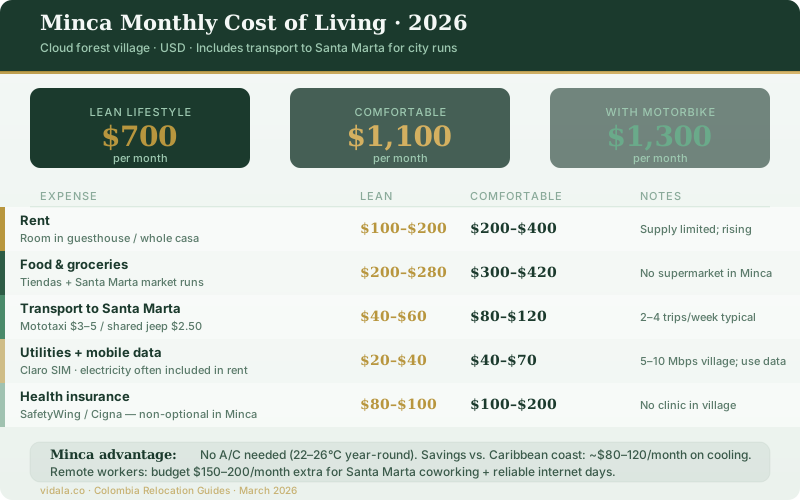
Affordable now. Less affordable than it was in 2021. Keep that trajectory in mind.
Birdwatching — Why Minca Draws Serious Birders
The Sierra Nevada de Santa Marta is one of the most biologically significant mountain ranges on Earth. It’s geologically isolated from the main Andean chain, which produced extraordinary levels of endemism over millions of years. Over 600 bird species have been recorded in the Sierra Nevada. A significant number of them exist nowhere else.
The endemics are what serious birders come for. The Santa Marta Parakeet (Pyrrhura viridicata) is one. The Santa Marta Antpitta (Grallaria bangsi) is another, found in dense undergrowth and frustratingly difficult to see. The Santa Marta Brush Finch, the Santa Marta Warbler, the Santa Marta Woodstar hummingbird. These are species that exist only in this mountain range. Minca puts you at the base of this system with good trail access and knowledgeable local guides.
For casual birdwatchers and people who’ve never picked up binoculars: you’ll still see extraordinary wildlife. Hummingbirds at feeders set up by local fincas, multiple tanager species in the trees above the village, trogons and manakins in the forest. Dawn from any guesthouse porch in Minca is louder with birds than most forest reserves elsewhere in South America.
Guides are available and worth hiring for the endemic species. Minca’s hostel owners and finca operators are often knowledgeable birders who have spent years watching the slopes. Ask your accommodation who they recommend. For the antpitta specifically, a good guide knows the specific territories where calling works. Without one, you’ll hear it and never see it.
Day trips to higher elevations — Pozo Azul, and especially La Cumbre further up the Sierra Nevada slopes — access montane species not present at village elevation. These trips require a guide and reasonable fitness. They’re among the better birding days available in Colombia without entering a national park.
Natural Pools and Waterfalls
Pozo Azul is a 20-minute walk from the village. Natural swimming hole, cold and clear. On weekends it fills with domestic tourists from Santa Marta. On weekday mornings, it’s quieter and genuinely beautiful.
Cascada Marinca is further and sees fewer people. The extra 30 minutes of hiking is worth it if you want to swim without a crowd. Most long-term residents prefer Marinca for that reason.
La Victoria Coffee Farm has a natural pool on the property that can be combined with a coffee tour. Worth doing both together.
For residents, these aren’t activities in the tourism-brochure sense. They’re where you go on Sunday afternoon when it’s hot. That re-framing matters for understanding what daily life in Minca actually looks like.
Internet and Remote Work Reality
Limited. Improving. Not there yet.
Mobile data from Claro reaches the village center and runs around 5–10 Mbps on a good signal. Some accommodations have invested in satellite connections over the last two years. A few have fiber. Ask specifically and ask for the actual speed, not “we have WiFi.”
The realistic assessment: Minca works for async remote work. Slack, email, document collaboration, writing, most software development work. It does not work well for jobs requiring reliable video calls every hour or high-bandwidth file transfers.
The model that most expats actually use: base in Santa Marta (which has reliable fiber and coworking spaces), come to Minca for three or four days per week or on weekends. The 45-minute commute is not ideal, but Santa Marta is genuinely good for remote work and Minca is genuinely good for living. Splitting the week between them is a reasonable solution that avoids having to choose one or the other.
If you need full-time reliable internet from Minca specifically, wait another year or two. The infrastructure is moving in the right direction.
The Yoga and Wellness Scene
Established and growing. Casa Elemento (the hammock hostel at 1,000 meters, above the cloud layer on clear mornings) has become one of the most-photographed spots in Colombia. Mundo Nuevo Hostel runs regular yoga sessions with sunset views. Several smaller retreat centers have set up on the slopes above the village.
The demographic is a mix: digital nomads with a wellness bent, backpackers doing a Colombia loop, birdwatchers, occasional retirees, and repeat visitors who became residents. It’s younger on average than Medellín’s Laureles expat scene or Cartagena’s established foreign community.
Community is transient. People come for a week and stay two months. You’ll meet new people constantly; deep friendships take time to form and are less common than in more stable expat hubs. If you’re looking for a consistent long-term community with weekly meetups and social groups, Minca isn’t built for that yet. If you’re comfortable with a more fluid social environment, the constant new arrivals can be a feature rather than a limitation.
Coffee Finca Culture
Several fincas on the slopes above the village offer coffee tours. Finca La Victoria and Finca Buen Viento are established operators (confirm current availability before visiting, as small operations change). Tours run $10–20 and typically include roasting and cupping.
Coffee in Minca is worth experiencing, but it’s secondary to birdwatching. Unlike Salento, where the coffee culture is the primary draw and the birds are a secondary feature, Minca inverts that hierarchy. The Sierra Nevada endemics are the editorial spine; the finca tour is a half-day addition. Don’t come to Minca specifically for coffee and expect the Salento experience.
Safety
Safe village. Small community, low anonymity, low crime. The same open-door culture that makes Minca feel calm is also practical security — everyone knows everyone, strangers are noticed.
Trails into the Sierra Nevada deserve specific attention. The Sierra Nevada has historically sensitive areas related to indigenous land rights and past paramilitary activity in higher elevations. Stay on marked trails. For anything beyond day hikes into the lower slopes, hire a local guide who knows current conditions. Don’t hike alone at night on any trail, even the Pozo Azul path.
Healthcare
There is no clinic in Minca. The pharmacy in the village handles minor needs. Anything requiring a doctor means Santa Marta, 45 minutes away by mototaxi. Anything serious means Hospital Universitario Fernando Troconis in Santa Marta or a transfer to Barranquilla.
The mototaxi-first reality matters: if you have a medical emergency in Minca, your first transport option is the back of a motorbike down a winding mountain road. Factor that into your risk calculation. People with chronic conditions, significant cardiovascular risk, or who are not comfortable with rural medical access should not live in Minca full-time.
International health insurance (SafetyWing or Cigna for longer stays) is not optional here.
Who Belongs in Minca (and Who Should Stay in Santa Marta)
Good fit: Birders, especially serious ones who want Sierra Nevada endemic access. Wellness and yoga practitioners who want a retreat setting as a daily environment. Remote workers with async-first schedules and reasonable internet tolerance. Anyone who needs cool mountain air within reach of Caribbean beaches. People who visited once and couldn’t stop thinking about it.
Not a good fit: High-bandwidth remote workers who need reliable video infrastructure. Anyone with healthcare needs beyond pharmacy access. Families with school-age children (Santa Marta has schools; Minca doesn’t). People who want grocery shopping within walking distance.
The Santa Marta/Minca split is the answer to most of these constraints. Santa Marta is 45 minutes and $3–5 away. It has hospitals, supermarkets, coworking spaces, a university, nightlife, and good beaches. Living in Minca doesn’t mean cutting yourself off from any of that. It means choosing where you sleep, and sleeping somewhere with cloud forest at your window and the Sierra Nevada birdlife at dawn.
That’s a real choice, and for the right person, it’s a good one.
For visa options including Colombia’s V Digital nomad visa, see our Colombia digital nomad visa guide. Minca pairs naturally with a Santa Marta base — see our Santa Marta expat guide. For broader Colombia comparison, see best places to live in Colombia.